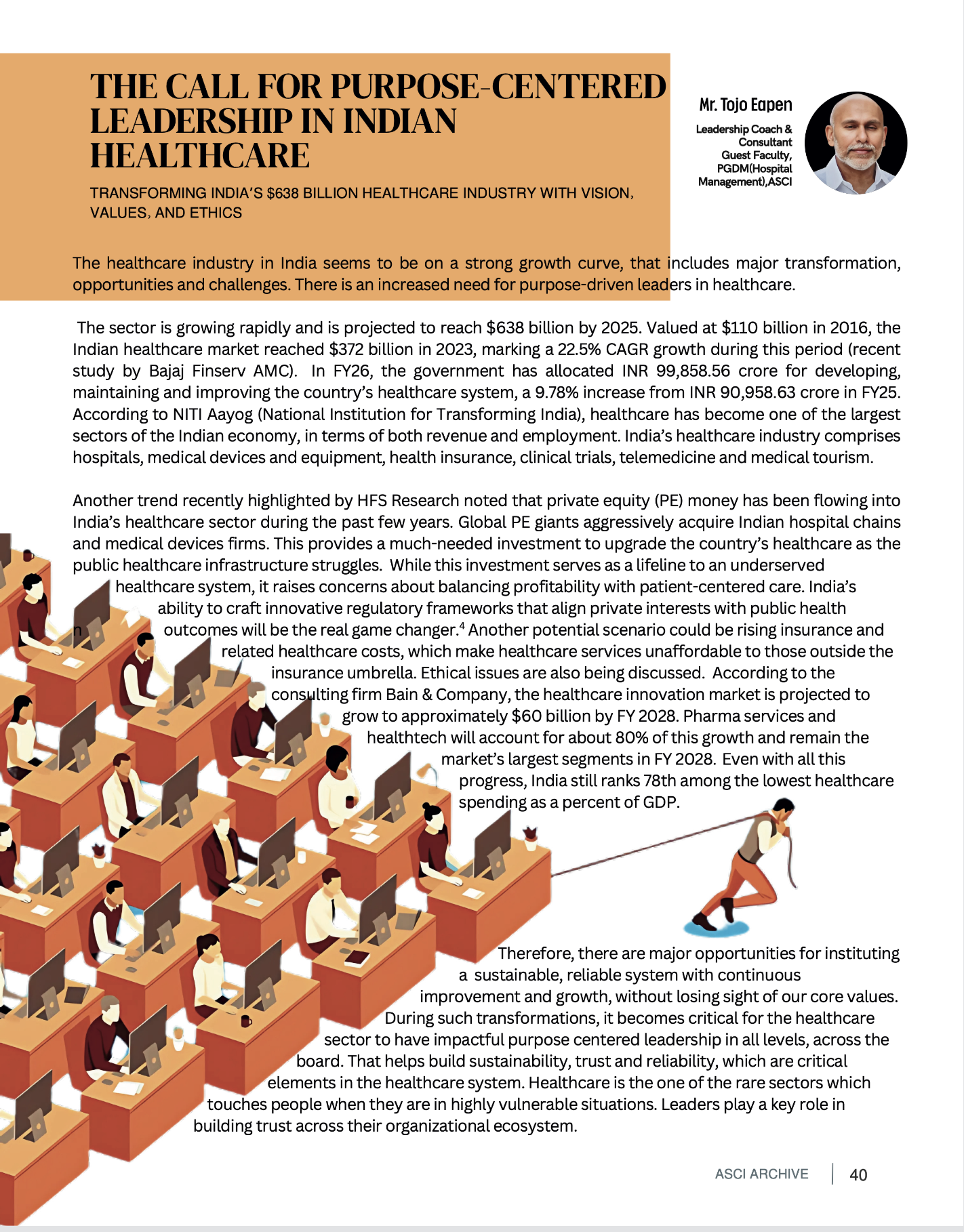
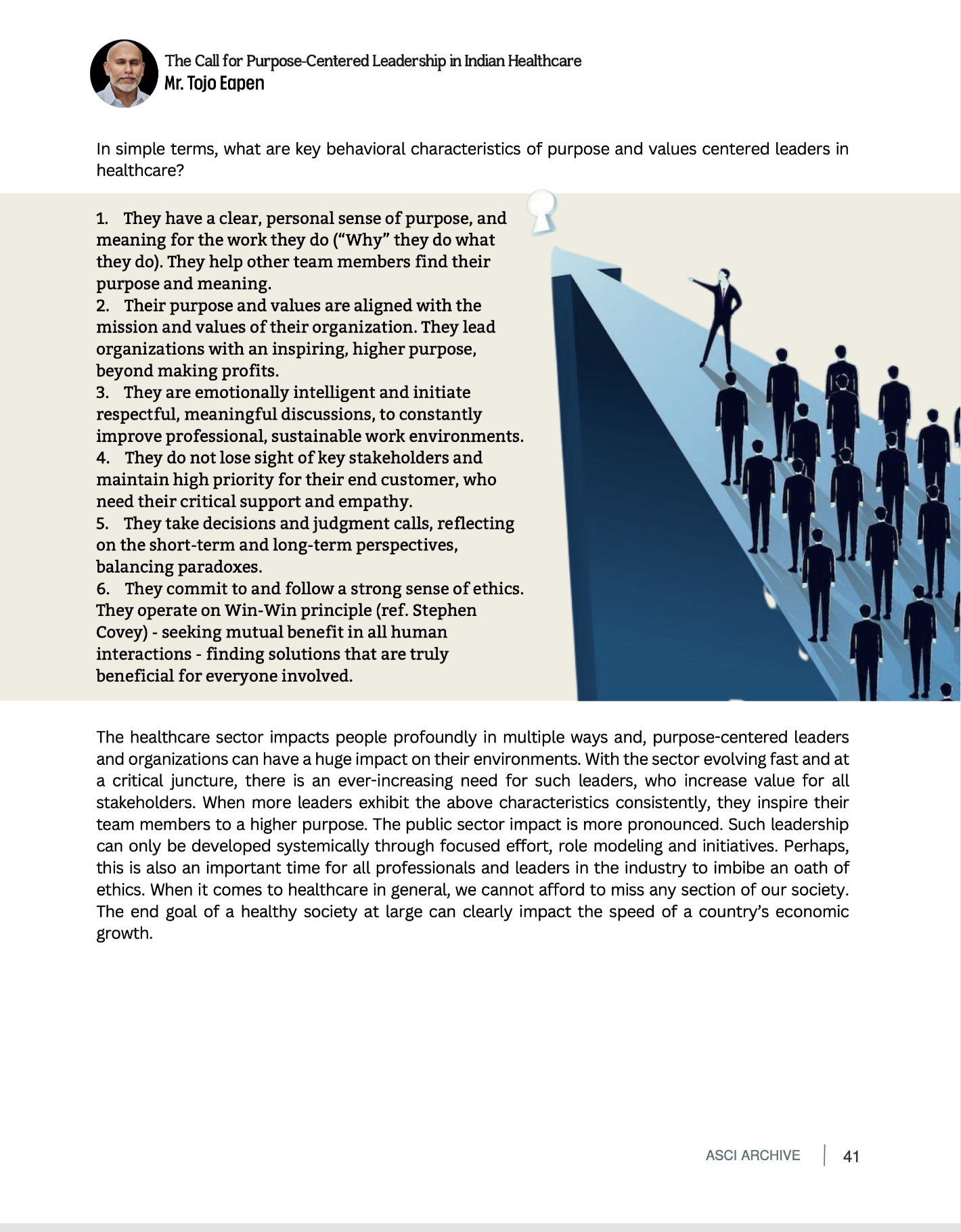
Sharing a recent article I wrote, titled, “The Call For Purpose-Centred Leadership In Indian Healthcare” for the Administrative Staff College of India, Post Graduate Diploma in Hospital Management (Hyderabad) program magazine. Our healthcare sector requires transformational leadership that positively impacts our larger society and stakeholders, as it evolves.
What are the effects of incivility (disrespect/rudeness) on your business and people?
A TED Talk (video link below) from Prof. Christine Porath includes useful references on this topic, which are backed by research. There are also some positive behavioural examples (if you are wondering, as a manager or leader, how you could do better on this dimension).
Selected notes from the talk: * Small, uncivil actions can lead to much bigger problems like aggression and violence. * According to their study, incivility made people less motivated. 66% cut back work efforts, 80% lost time worrying about what happened, 12% left their job. * For those who witness incivility, witnesses’ performance decreased, too…quite significantly. * Incivility is a bug. It’s contagious, and we become carriers of it just by being around it. And this isn’t confined to the workplace. * It affects our emotions, our motivation, our performance and how we treat others. It even affects our attention and can take some of our brainpower. And this happens not only if we experience incivility or we witness it. It can happen even if we just see or read rude words. * This can be a big deal, especially when it comes to life-and-death situations. Researchers have actually shown that medical teams exposed to rudeness perform worse not only in all their diagnostics, but in all the procedures they did. This was mainly because the teams exposed to rudeness didn’t share information as readily, and they stopped seeking help from their teammates. * The number one reason for incivility is stress. People feel overwhelmed. The other reason is because they’re skeptical and even concerned about being civil or appearing nice. They believe they’ll appear less leader-like. It’s easy to think so, especially when we see a few prominent examples that dominate the conversation. * According to research from the Centre for Creative Leadership, number one reason tied to executive failure was an insensitive, abrasive or bullying style. * It ties to one of the most important questions around leadership: What do people want most from their leaders? We took data from over 20,000 employees around the world, and found the answer was simple: respect. Those that felt respected were healthier, more focused, more likely to stay with their organization and far more engaged. * Civility and respect can be used to boost an organization’s performance. * When we have more civil environments, we’re more productive, creative, helpful, happy and healthy.
About Tojo Eapen
Leadership Coach, Consultant, HR Leader with diverse, global experiences (U.S.A, Europe, APAC).
Master of Human Resource Management from Rutgers University, New Jersey, U.S.A. Recipient of the U.S. Garden State Council SHRM HR Leadership Scholarship.
Bachelor of Technology in Civil Engineering from College of Engineering, Trivandrum, India.
Certifications: MBTI, Hogan, RBL Leadership Code, SHL 360, Team Management Profile, NeuroLeadership Results & Team Coaching.
Facilitated coaching sessions, workshops and programs with multicultural teams in Helsinki, London, Berlin, New Delhi, Bangalore, Kerala, in addition to multiple Global/Virtual sessions.
Mission: Enable healthy, purposeful, and impactful organizations, through leadership knowledge and wisdom.












Recent Comments