PURPOSE & IMPACT

Category: Culture (page 1 of 2)

Understanding Country Culture Link to General Behaviours and Approaches

Understanding the different dimensions of country cultures could often help clarify behaviours, ways of working, approaches and interactions better. That of course would not answer everything. There are always personality elements, professionalism/maturity levels, individual styles and sub cultures at play, in interactions.

A couple of recent related news items got me thinking about this topic. A journalist from Norway asked a question, which a diplomat from India answered, and both parties did not seem engaged or happy with their style or approaches in interactions. These sort of frustrations in interactions can be seen in the global workplace often. I think that at least a good portion of the frustration stems from the difference in their cultural contexts.

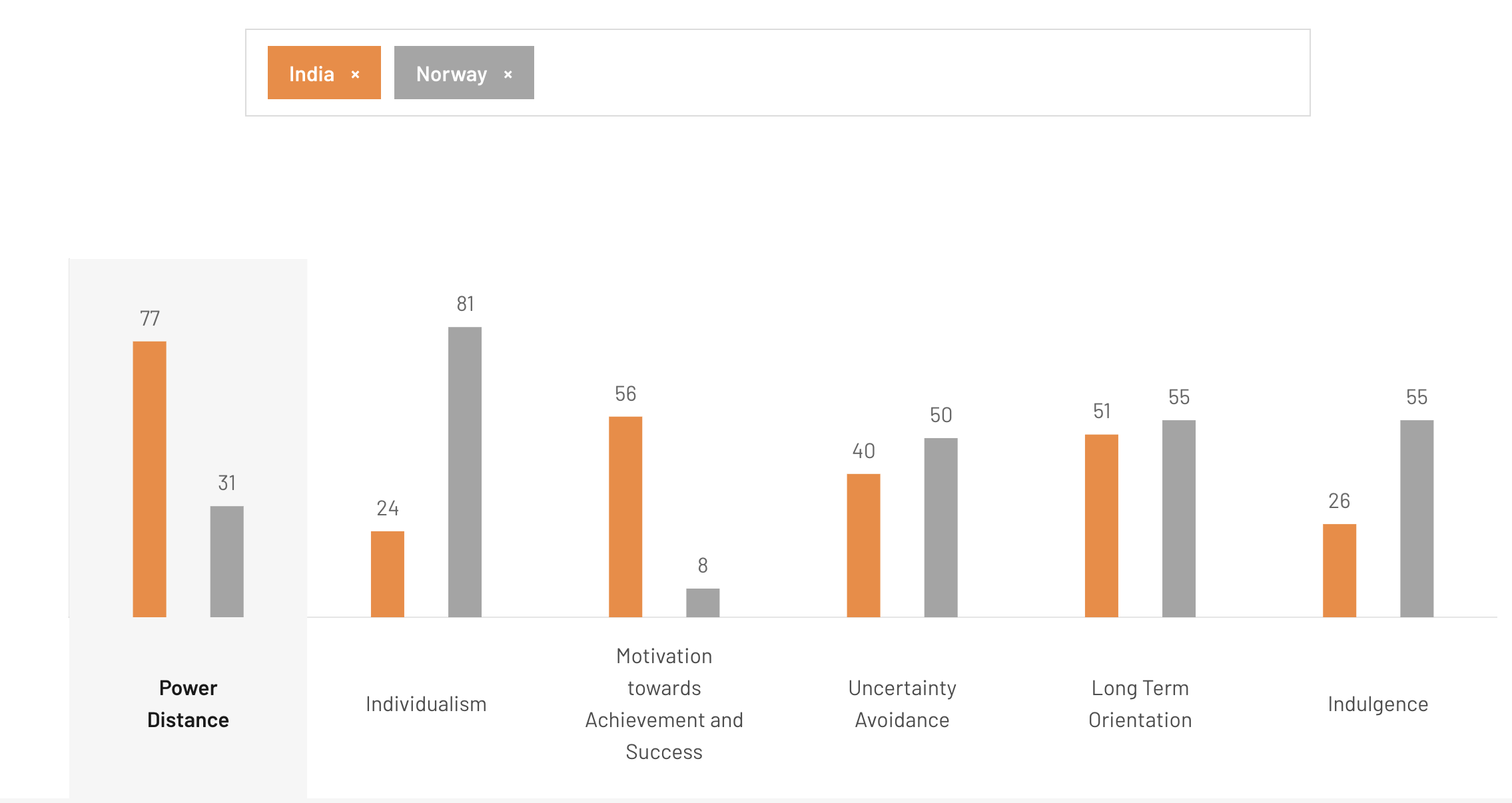
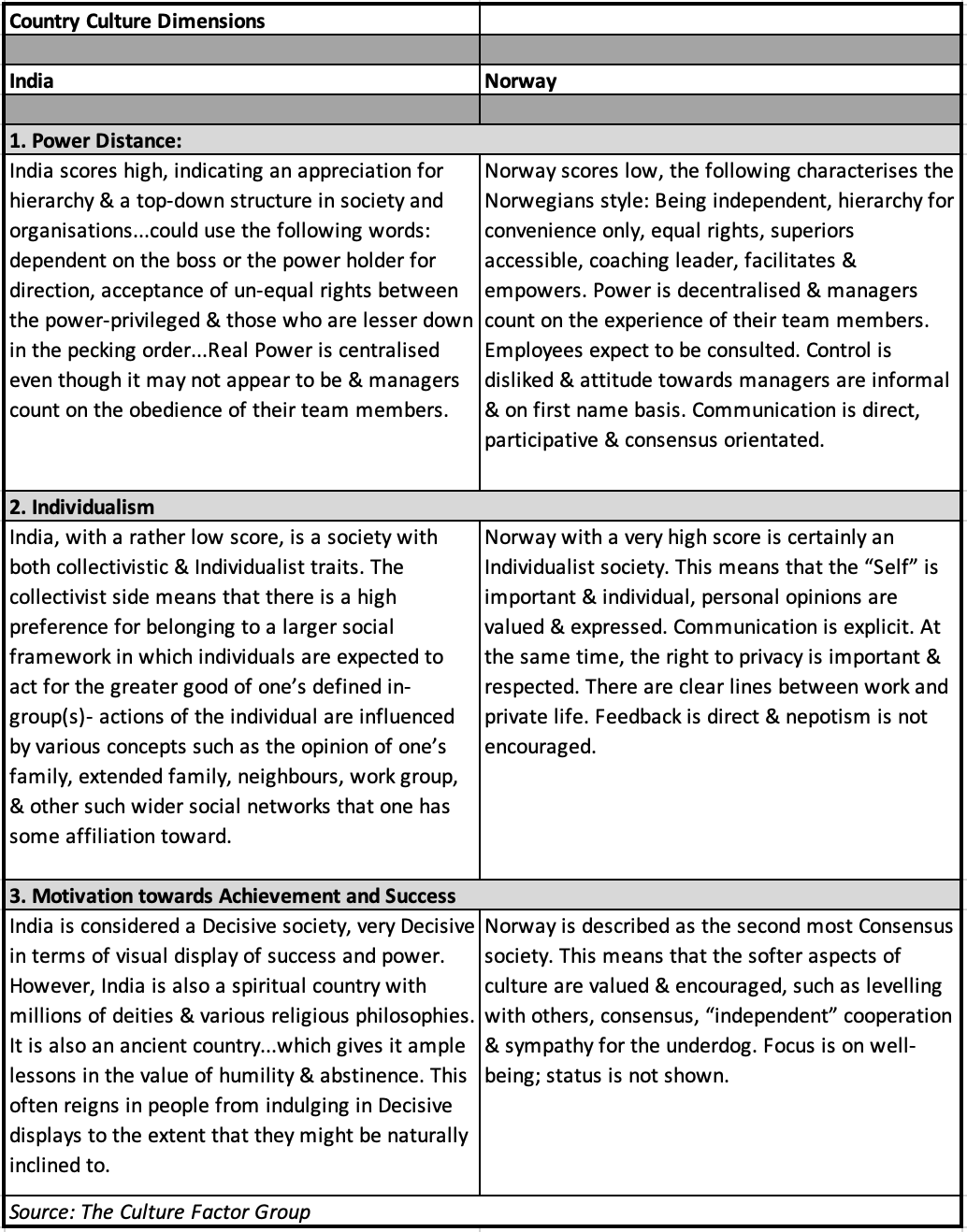
I gathered the following, selected notes from the The Culture Factor Group, Culture Dimensions Country Comparison tool – which compares India and Norway. Having lived and worked in Scandinavia for many years, I can see why it would be easy to misunderstand or ‘not get’ someone on the either side. The Culture Dimensions structure inputs originated from the late Prof. Geert Hofstede’s research. He was one of the most well-known experts in comparative intercultural research. These cross cultural inputs are updated through research notes periodically by the Culture Factor group.

According to inputs from the tool, major culture dimension differences exist between India and Norway in three out of the six dimensions – Power Distance, Individualism and Motivation towards Achievement and Success. Selected notes on these dimensions are included below. Hope this will help in thinking about the topic more deeper.


Does Kindness Have A Place in Business?

Noticed refreshingly different perspectives from Mayank Rautela, Group CHRO at Apollo Hospitals – regarding how kindness is not just a “soft skill” but a business imperative and how it can be strategically embedded into leadership. There are some valuable notes for reflection, especially for healthcare leaders everywhere and the interview (referenced below) is worth reading.

Selected notes from the interview with ETHRWorld:
* Genuine human connection is profoundly contagious. It transforms a transactional environment into a compassionate one, inspiring others to pay it forward and shaping a culture where compassion is the norm, not the exception.
* Kindness is a strategic driver of performance. It’s the foundation of psychological safety…We’ve consistently observed that teams that practice kindness most also have the highest engagement, lowest attrition and better clinical outcomes. Research validates this link: empathy in care leads to greater patient loyalty and trust.
* For a leader, kindness is a core competency, not a soft trait. It’s about leading with authentic empathy and vulnerability.
* We are conditioned to prioritise efficiency over empathy, and many feel they simply don’t have the time to be kind. The real issue isn’t a lack of desire, but fear that kindness may be seen as weakness.
* Kindness must be an institutional commitment, not an accident…also lives in the way we celebrate our people.
* We balance performance with empathy by making kindness integral to our HR strategy.
* Kindness endures when it is deeply woven into the fabric of an organisation’s DNA – through its values, everyday behaviors, recognition systems, and leadership practices…cannot be a one time initiative, must be a way of life.

Source:
Kindness isn’t soft — it is strategy: Apollo Hospitals’ Mayank Rautela on reshaping workplace culture; ETHRWorld; October 1, 2025.

Effects of Incivility on your business and people

What are the effects of incivility (disrespect/rudeness) on your business and people?

A TED Talk (video link below) from Prof. Christine Porath includes useful references on this topic, which are backed by research. There are also some positive behavioural examples (if you are wondering, as a manager or leader, how you could do better on this dimension).

Selected notes from the talk:
* Small, uncivil actions can lead to much bigger problems like aggression and violence.
* According to their study, incivility made people less motivated. 66% cut back work efforts, 80% lost time worrying about what happened, 12% left their job.
* For those who witness incivility, witnesses’ performance decreased, too…quite significantly.
* Incivility is a bug. It’s contagious, and we become carriers of it just by being around it. And this isn’t confined to the workplace.
* It affects our emotions, our motivation, our performance and how we treat others. It even affects our attention and can take some of our brainpower. And this happens not only if we experience incivility or we witness it. It can happen even if we just see or read rude words.
* This can be a big deal, especially when it comes to life-and-death situations. Researchers have actually shown that medical teams exposed to rudeness perform worse not only in all their diagnostics, but in all the procedures they did. This was mainly because the teams exposed to rudeness didn’t share information as readily, and they stopped seeking help from their teammates.
* The number one reason for incivility is stress. People feel overwhelmed. The other reason is because they’re skeptical and even concerned about being civil or appearing nice. They believe they’ll appear less leader-like. It’s easy to think so, especially when we see a few prominent examples that dominate the conversation.
* According to research from the Centre for Creative Leadership, number one reason tied to executive failure was an insensitive, abrasive or bullying style.
* It ties to one of the most important questions around leadership: What do people want most from their leaders? We took data from over 20,000 employees around the world, and found the answer was simple: respect. Those that felt respected were healthier, more focused, more likely to stay with their organization and far more engaged.
* Civility and respect can be used to boost an organization’s performance.
* When we have more civil environments, we’re more productive, creative, helpful, happy and healthy.

The Power of ‘Curiosity’

These are valuable notes below for reflection on “Curiosity” from a recent Harvard Business Review article titled, The Right Way to Prepare for a High-Stakes Conversation. Curiosity mindset seems to drive learning. The powerful impact and related behaviours appear in many articles and studies, including leadership potential (Egon Zehnder).

“In a world where information is abundant but insight remains scarce, curiosity may be the ultimate competitive advantage.

If you wouldn’t fly on a plane that hadn’t had a preflight check, why head into a high-stakes conversation without first checking your most vital mindset: curiosity?

The question isn’t whether you’ll face disagreement and pushback in your next high-stakes conversation—it’s whether you’ll be mentally prepared to transform that into insight and constructive action.

Curiosity is a choice, and that choice begins before you speak your first word.

By honestly assessing where you sit on the Curiosity Curve, setting realistic intentions to move toward greater openness, and deploying targeted Curiosity Sparks, you can transform your most challenging interactions from battles to be won into opportunities for mutual discovery and collaborative problem-solving.”

According to the author, there are four surprising benefits of curiosity.
“1. When We’re Curious About People, They Like Us More.
2. Curiosity Begets Curiosity
3. Curiosity Creates Empathy
4. Curiosity Makes Us More Resilient

To get more curious, try asking yourself one of these “curiosity sparks.”
1. What might I be missing?
2. How else might someone else interpret this situation?
3. How might I be affecting them?
4. What can I learn from this person?


Can you build the curiosity mindset into your organisation culture?
Perhaps a good place to start with is in leadership and management development.

Sources:
* The Right Way to Prepare for a High-Stakes Conversation; Harvard Business Review; Jeff Wetzler; July 2, 2025
* 4 Surprising Benefits of Curiosity; PsychologyToday; Jeff Wetzler; December 12, 2024

Notes on Organization Culture from from The Culture Factor Group (previously known as Hofstede Insights)

The Culture Factor Group takes a well structured approach (including assessments) on the topic of organization culture.

Here are some related perspectives and notes from them:

* Definition of “culture” – “the programming of the human mind by which one group of people distinguishes itself from another group”.  It is always a shared, collective phenomenon, that is learned from your environment.
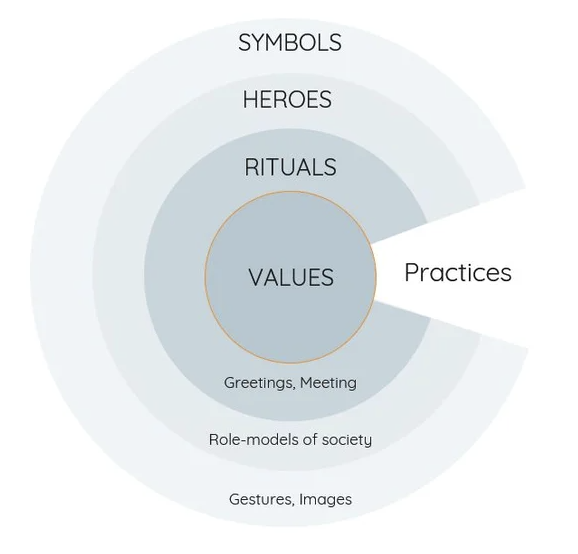
* Culture consists of various layers – symbols, heroes, rituals and values.

* Organisational Culture tends to be more straightforward and precise to measure than National Culture. This is because, unlike nations, most organisations have clear objectives and requirements.
* While differences between National Cultures are most apparent in the values, differences between organisations within the same nation can most clearly be seen in the practices of the organisations. This is also why Organisational Culture, unlike National Culture, can be changed by changing those practices.
* It is never a good idea to try to apply the culture of another organisation as the optimal culture for yours. Your context is unique, the founders of the organisation are different and the economical landscape is likely to be different.
* When it comes to shaping the culture of an organisation, leadership can play a particularly important role. The leaders are the ones who have the most influence over shaping it – Are they setting the right example? Do their actions align with the organisational values?

Dimensions of Organisation Culture
* Dimension 1: Organisational Effectiveness
* Dimension 2: Customer Orientation
* Dimension 3: Level of Control
* Dimension 4: Focus
* Dimension 5: Approachability
* Dimension 6: Management Philosophy

Source: Organisational Culture, What You Need To Know; The Culture Factor Group


Notes on Organization Culture from Heidrick & Struggles

Executive search and leadership consulting firm, Heidrick & Struggles recently came out with an interesting infographic on organization culture.

Selected notes from the infographic:

* Companies with stronger cultures also have stronger financial results.
* Organizations with a high trust culture are 50% more productive, 76% more innovative.
* Strong cultures don’t happen on their own. They’re the result of active cultivation. 70% of change initiatives fail due to cultural resistance.

1. 49% of CEOs found focusing on culture “significantly improved” financial performance. 71% of CEOs view culture as a top-three influencer on financial performance. CEOs and Board of Directors must be visible active culture drivers.
2. Highly aligned companies grow revenue 58% faster. Align on purpose, strategy, structure and culture.
3. Only 13% of employees perceive their leaders to be effective communicators. Equip leaders to deliver a consistent message that explains the “what, why, and how” of the culture journey.
4. Employees will encounter your message 3-5 times before it resonates. (In my personal observation, it’s more). Activate a culture plan that engages people.
5. 92% of highly engaged workers feel listened to in the workplace. Measure progress and adjust (culture dashboard, metrics).

How could you make your organization and team culture stronger?


Source:
Infographic; 5 Ways To Activate Your Culture To Drive Performance; Heidrick & Struggles.

A glowing example of relationship across cultures, and beautiful words of tribute for Osamu Suzuki

Maruti Suzuki India Limited (MSIL) Chairman R C Bhargava on Osamu Suzuki, who led Japan’s Suzuki Motor for more than four decades and played a key role in turning India into a flourishing auto market. Osamu Suzuki died on Christmas day, aged 94.

“I have lost someone who was closer than a brother. He changed my life and showed how nationality is no barrier to people building unbreakable bonds of trust in each other. He was my teacher, mentor and person who stood by me even in my darkest days. If I played a role in the success of Maruti, it was because I was his student and he taught me how best to grow a firm and make it competitive…”

In April 1982, when Osamu Suzuki, then President of Suzuki Motor Corporation, signed a Memorandum of Understanding with Maruti Udyog Limited to manufature a 800cc car(which later became the iconic Maruti 800), a carry van and a pickup truck, even the Japanese embassy in Delhi was not in favour of the deal. Bhargava, then an IAS officer working at Maruti, had met Suzuki for the first time just a month before the MoU was signed.

In the first year of production, about 850 units of Maruti 800 were sold. Last financial year, MSIL produced 2.135 million vehicles. Today, MSIL is India’s largest car maker with more than 40 percent market share by volume.


——-

Source: Business Standard, 28 December 2024, Visionary auto tycoon who made winning bet on India, Reuters, Tokyo, 27 December, 2024

About Fear And Resilience In Organizations

Content Credit: BiancaVanDijk (Pixabay)

I wanted to share some useful notes from the book, “The Psychology Of Fear In Organizations” by Dr. Sheila M Keegan, a Chartered Psychologist, and Fellow of the Market Research Society and Bath Business School. A lot of these play out in organizations every day and it helps a lot for leaders to be aware.

*Business psychologist and coach, Chris Welford identifies five telltale signs of a fear-based culture.
1. There is a preoccupation with status and conformity, and where rules have precedence over common sense.
2. Distinct in-groups exist and there is little opportunity to cross the boundaries between them.
3. Everything is measured but nothing is questioned.
4. Appraisals are only ever one-way.
5. The accent is on pace but short-term gain is known to be at the long term cost.

…Not surprisingly, in a fearful working climate, employees tend to mirror the behaviour of their managers. Management over-control generally has the effect of discouraging risk-taking, squashing initiatives and dispelling creativity and novel thinking.

… Feeling fearful, threatened or undermined at work can have a major effect on our work performance, as well as on our mental and physical health. Fear impacts our relationships with our colleagues and managers. We bring fear home with us…

How To Develop Personal Resilience, A Critical Element For Working Effectively Through Fear
…On a personal level, developing resilience is an ongoing process that involves a mixture of adjustments. Resilience can be developed by:
* having supportive work networks and healthy relationships.
* focusing time and energy on things we have some control over, rather than expending energy on aspects that are outside our control.
* actively looking for opportunities for self discovery and broadening our perspectives.
* practising cognitive restructuring: changing the way in which we think about negative situations.
* paying attention to our body as well as our mind, paying attention to one’s own needs and feelings.
* keeping a long term perspective, and considering the broader context.
* taking decisive actions.
* maintaining a hopeful outlook…

These are only few perspectives on a much broader topic.

Importance of A Healthy Work Environment and Related Practices

There’s been a lot of attention and discussion related to the unfortunate recent death of an employee in a large company in India, related work environment and practices. The fact that this is being shared, discussed heavily on social media and the media, indicates this topic has touched many people deeply.

* As business founders, leaders, managers and HR professionals, it is important to be proactive in ensuring healthy work environments in your organisations. This includes the focus on work, organization culture, policies and practices, leadership behaviors, health and wellbeing of your team members.
* All of you have important, shared responsibilities which impacts lives of your employees and their families.
* Doing nothing or staying silent never helps and most times, silence encourages toxic behaviours. Psychological safety is a core element of a healthy work environment. At a minimum, it is critical to initiate constructive discussions/dialogues with the long term interest of your people and sustenance of your organisation in mind. Do not brush the uncomfortable discussions away. Start with few fundamental steps that may hold high impact and visibility. Figure ways to manage stress proactively, actions to take when the red light indicators show up (they will show up in some form). When groups of managers and leaders work collectively with their support teams, get support and help (internally or externally), things will improve.
* In larger companies, it’s easier to lose sight of individual cases and stay hidden. The stress threshold levels can be different for individuals. Team members play a key role here in identifying, awareness and support.

Don’t let toxic elements/aspects linger and grow till it becomes too late.

For many leaders and organisations, the key learning here is to be proactive and not wait for worst case scenarios (irrespective of direct or indirect causes) to play out.

On the other side of the coin, many professionals and companies have high ambition and drive (that’s normally the path to quick growth) but that needs to be balanced with the constant reminder that the work is similar to a marathon, not a sprint. One needs to be prepared for the marathon. The growth process, and speed will be continuous and one needs to adjust the pace. Companies always are in a race to keep growing. The alternative is gradual decline. It is very important for the individual employee to be equally focused and responsible for safeguarding one’s own health and well being – to ask for support when needed, get help and figure ways to stay healthy physically and mentally. If the organization culture is not supportive, find personal ways to stay healthy. If that doesn’t work still, it is completely okay to find another workplace that works better for you.

The role of leaders in ensuring a healthy work environment is critical.

Chairman of multiple companies, and former CEO Douglas Conant recently said, “Surprisingly, I find that I cannot say it enough.”
…” leadership comes from within, from our humanity. We cannot be “artificial” in any way in our leadership; we must be authentic, true to ourselves, and true to the people with whom we live and work.”

There is a need to reaffirm, remind constantly about the fundamentals of a healthy workplace, and the critical role of positive, healthy leaders. When people spend most of their lives at the workplace, that could make a huge difference.

A Decade of Cross Cultural Experiences in Four Fundamental Practices

After spending over a decade of my life in Finland/Europe and the U.S., and having had the great opportunity to interact and work with talented individuals and leaders from various cultural backgrounds and journeys, I wanted to synthesize and share some of my key experiences and lessons in cross-cultural experiences.

Working and living across countries/cultures may present great opportunities and at the same time, they hold numerous challenges. The ability to work effectively with, lead and manage across cultures are competencies that are becoming very important in a world that continues to get smaller and closer, due to rapid advances in technology and social media. As glamorous as it may seem from a distance, adapting to and succeeding in a very different culture are not at all easy. Those who choose to be ignorant of this topic will lose great opportunities for personal and professional growth.

There’re numerous studies and research articles on this topic and some of my thinking has been influenced by them.

If you come to another’s turf with empathy, sensitivity and open ears – what the Zen masters call ‘beginner’s mind’ – you’re halfway home.
– Tom Peters

1. Respect
Being aware, sensitive to and noticing some of the key themes, norms and behaviors in a new environment constitute an important starting point. This can help one to understand how things work, life patterns flow and what is valued in that setting. Many of the norms would be very different from one’s own conditioning and would seem strange initially. Being respectful to individuals and cultural norms helps to adapt faster to any new environment. One would also need to be respectful of the differences and try to understand the background without being judgmental. There is a possibility of feeling disrespected or ignored, in some instances. Chances are that, not everyone in a different culture is aware of the nuances of your culture and interaction styles. Irrespective of how you feel initially, your mature approach and respectful presence can increase your acceptance, credibility and prevent you from getting stuck in a frustration zone.

2. Openness To New Experiences Without Judging
This is vital for making progress in a different cultural setting. Stephen Covey’s teaching, “Seek first to understand, then to be understood” is a very useful advice to keep in mind while interacting with people from a different culture. It is useful to be aware of our own biases and that our biases and environmental conditioning may easily lead us into the questioning, judging, confusing and eventually distrusting zone.  Individuals from different backgrounds can look at the same scenario and perceive it very differently.  Categorizing something in your mind as superior or inferior, right or wrong, good or bad etc. will impact your own thinking ability and responses to situations and people.  Open communication with authenticity is fundamental to avoiding misunderstandings. During initial stages of interactions, it’s useful to explain the reason behind doing or asking for something that impacts others, and clarifying the same with others without creating a ‘threat’ state, when there are questions in your mind. This avoids confusion, especially in the initial stages of relationship building.

3. Flexibility
As mentioned earlier, I realized that my own way of seeing a topic was very different from how others from a different background related to the same topic.  Being flexible relates to building self-awareness and using that awareness effectively to understand and manage through various scenarios.  This would also mean shifting/stretching ways of thinking and adjusting/ changing one’s own approaches.  Taking the responsibility to tackle an unpleasant situation with maturity and emotional intelligence requires a lot of flexibility, to flex one’s own thinking frames. It’s very useful to have a positive ‘forgiving’ and ‘forgetful/let go’ attitude with unpleasant experiences, while being aware of one’s own learning.  Very seldom does anyone win an argument of being right or wrong.  ‘Co-regulation’ beyond ‘self-regulation’ is very helpful.  Vicious responses only result in cycles of vicious interactions and stress, which take the relationships further into the red zone.  On the other hand, not engaging in a proactive, positive conversation results in increasing distance.

4. Coping with the unknown and fear of failure
There’re a lot of unknowns in a new environment. Finding information through formal and informal channels and making personal connections are very helpful to put one at ease initially. One has to also find relevant ways to accept, understand and cope with stress related to uncertainties of the new environment. It generally will take a certain amount of time before adjusting and feeling comfortable in a different cultural environment.  Patience is fundamental to work through times of frustration, disappointment and negativity.  It may not be uncharacteristic to go through a feeling of ‘being lost’ at times.  It is really important to find one’s own support from ‘comfort zones’, secure bases and ‘connections’ in those situations.

It is helpful to be prepared for mistakes and misunderstandings along the way. Fear of failure can inhibit people from experimenting or experiencing new things, which reduce the impact of the cultural experience, knowledge and personal development. The normal tendency might be to stay within one’s own comfort zones most of the time.

According to a leading expert in this field Fons Trompenaars,

“We need a certain amount of humility and a sense of humor to discover cultures other than our own; a readiness to enter a room in the dark and stumble over unfamiliar furniture until the pain in our shins reminds us of where things are.”

Your willingness and openness to step into the new world can take you to a totally new dimension of personal growth, deep connections and confidence.  Enjoy the journey.  Best wishes…

Please share your valuable learning and experiences!

Note:  The topic of ‘culture’ can be reviewed at different levels or frames.  I’ve tried to focus on the country culture aspect here.  Some of these practices can be useful in working through other aspects, like organizational culture differences.
Older posts

© 2026 Lead-Wise

Theme by Anders NorenUp ↑