PURPOSE & IMPACT

Category: HR (page 1 of 6)

Notes on Organisational Political Dynamics and the Concept of Dominant Coalition

I noticed some interesting, practical notes regarding ‘organisational political dynamics’, from the new book, The Age of HR. Since this was relatable from past experiences and valuable to reflect on, I thought of sharing. Have you been able to observe dominant coalitions in your organisations?


These notes are from Chapter 59 – To Be or Not to Be Part of the Dominant Coalition as the CHRO: Understanding the Political Dynamics of Your Organisation and How to Deal with Them, written by Dirk Buyens, Koen Dewettinck, and Silke Van Gansbeke


* It is helpful to recognise that politics and political behaviour are an inherent part of organisational life.
* In Darwinian terms, ‘survival of the fittest’ in this context often means those who are able to adapt best to the political environment are often the winners. 
* In executive committees, we once again observe striking differences in who truly has influence and who does not.

* The dominant coalition can be defined as the group of individuals who, relative to their peers, exert a disproportionate level of influence over organisational decisions. Every company contains employees who, over time, gravitate towards the centre of decision-making in the organisation.
* In practice, dominant coalitions are rarely secretive. Most employees are aware of who belongs to them, and very often it is functionally driven.

* For a CHRO, it is crucial to understand what we refer to as the paradox of the right strategy. The ‘right’ strategy is typically one chosen that delivers quick wins soon. Even if an alternative strategy might have produced superior long-term outcomes, this can never be proven. Challenging the dominant coalition on this basis is therefore futile and politically suicidal.

* The fundamental question CHROs must ask is: “How important is it for me to be part of the dominant coalition, and what price am I willing to pay?”
* Being part of the dominant coalition as a CHRO ensures that HR processes and policies are taken seriously when key decisions are made. The downside is that HR may be perceived as less neutral, undermining the role of the credible activist.
* Remaining outside the dominant coalition enhances perceived neutrality but risks HR initiatives being dismissed as mere exercises that aren’t taken seriously when it truly matters. 
* Ultimately, successfully sensing and navigating dominant coalitions requires strong political skills from the CHRO. 
* There must be a balance between the degree to which an organisation tolerates political behaviour and one’s own personal tolerance for it.
* Some CHROs are dismissed for being too naïve; others for being overly political. In all cases, dominant coalitions – and how CHROs engage with them – profoundly shape their careers. Purposeful self-management is therefore indispensable.
* Until CHROs navigate the political nature of organisations, they will continue to be limited in their impact. 

Notes On Workforce Analytics for Strategy Execution

This is a continuation of valuable notes from the free book, The Age of HR.

This post covers Chapter 14, Workforce Analytics for Strategy Execution: Ten Years Later (2015–2025) by workforce analytics guru, Mark Huselid. He co-authored the well known Harvard Business Review article, titled “A Players” or “A Positions?: The Strategic Logic of Workforce Management”.
There’s lots of valuable guidance and wisdom here, especially for those who have followed the topic of workforce analytics by Prof. Huselid over the years.

Image generated with Chatgpt

* 3 linked moves for leaders (HR & Line managers) who want to improve strategy execution through the workforce:
(1) identify the strategic work necessary to execute strategy;
(2) build differentiated workforce systems that enable that work;
(3) design measurement systems that connect workforce investments to business outcomes and reinforce accountability.
* ..the last decade has clarified a critical distinction: adopting analytics tools is comparatively easy; building an enterprise capability that reliably improves decisions is not.

* Not all jobs are equally strategic. “A” positions matter for strategy execution and exhibit high variability in individual performance, offering the greatest upside from improvement.
* Great firms manage their workforce like a portfolio, investing disproportionately in the highest return strategic work.

* This portfolio logic requires explicit tradeoffs.
* The practical test: Can senior leaders name the five to ten roles that matter most for executing the current strategy, and explain why those roles warrant disproportionate investment?

* Data abundance creates a false sense of progress.
* Enforce a simple rule-no measurement without a prior decision context.
If a metric does not help a specific decision-maker choose between competing alternatives, it should not be produced, regardless of how easy it is to generate.

* Correlation is abundant, causation is rare, and the difference determines whether workforce investments deliver returns or waste resources. Organizations that lack a causal model cannot learn from experience because they cannot distinguish signal from noise.

* In global settings, the strategic importance of jobs may differ by region.
“A positions” should not be treated as a single universal list; rather, the organization needs a consistent logic for identifying them, applied with contextual specificity.
* Identify strategic roles based on their contribution to strategy execution and performance variance, not tradition or hierarchy.

* Strategic jobs that matter today may not be the same five years from now.

* What works in one cultural context may not work in another.

* Advanced analytics raises concerns about privacy, fairness, and transparency. Embed responsible data management, informed consent, and bias checks into every step, treating ethics as integral to trust and long-term viability.

3 Enterprise Roles of the Transformational CHRO

Noticed these valuable notes on Transformational CHROs from the new book, The Age of HR, by Anthony Nyberg, Rebecca Kehoe, Dave Ulrich and Patrick Wright (editors).

These selected notes below are from Chapter 13, Beyond HR: The CHRO as a Catalyst for Enterprise Transformation, written by Melissa Anderson, Eva Rykrsmith, and Lynn A. McFarland.

The 3 Enterprise Roles of the Transformational CHRO

1. Integrator of Vision and Strategy
CHRO interprets signals from across the organization and the marketplace, translating noise into insight, and insight into action. This sensemaking function – converting ambiguity into coordinated action, requires strategic acuity, diagnostic rigor, and an ability to connect patterns that others miss. CHRO sees where energy is building, where resistance is forming, and where leaders may be misreading the moment. 
The Integrator grounds the operating system in reality, dismantling outdated accountability models and replacing them with adaptive structures, decision rights, and leadership practices that fit the company’s strategic ambition. By intentionally shaping culture as a designed condition, the CHRO ensures that employee experience reflects strategic intent, providing a shared environment where employees understand purpose, feel protected, and are empowered to perform.

2. Orchestrator of Execution
CHRO ensures that transformation is coherent across functions, geographies, and business units. They align leadership expectations, capability plans, operating models, and cultural interventions into a unified architecture. The Orchestrator meets leaders and teams where they are, using personal credibility and insight to influence adoption, guide alignment, and adapt interventions to context, ensuring that employees experience coherence, clarity, and support.
In practice, orchestration translates coherence into coordinated action. When culture is reinforced through predictable patterns of collaboration, accountability, and leadership behavior, employee experience becomes a visible outcome of alignment. The aligned, mutually reinforcing practices cultivate employee attitudes and discretionary behaviors essential for transformation.

3. Accelerator of Momentum 
The CHRO reduces friction and speeds up the organization’s path to outcomes. Acceleration involves more than urgency; it includes clearing structural bottlenecks, developing leadership capacity, prioritizing critical skills, strengthening collaboration, and embedding cultural mechanisms that reinforce desired behaviors.
In practice, the Accelerator ensures new capabilities and ways of working. CHRO shepherds this shift with equal measures of empathy and conviction, helping leaders internalize new expectations and align their teams. The HR team is activated to redesign operating models to reflect strategic intent, modernize workforce structures, develop readiness for future demands, and embed cultural mechanisms to reinforce momentum sustaining behaviors. Culture is reinforced as people experience tangible changes in work.

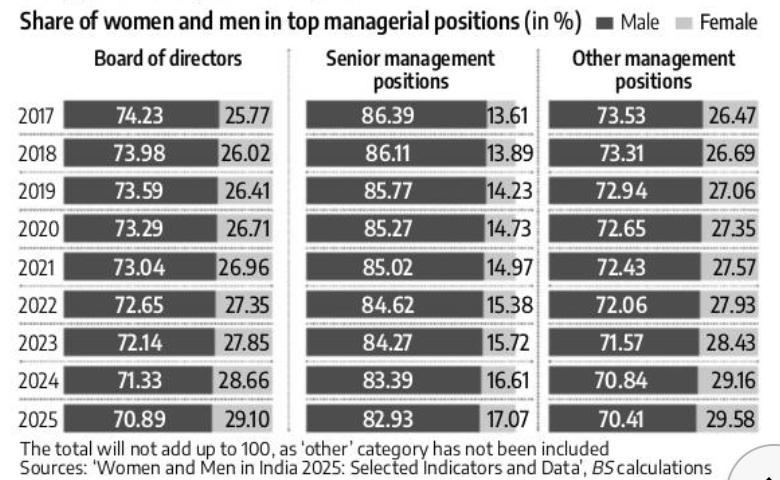
Progress of Women In Corporate Roles

Data shared in this week’s Business Standard paper, based on the “Women and Men In India 2025 Report” indicates that there is a lot of continued work needed in this area. The data indicates basic incremental progress.

Some key notes:
* Even as women are making inroads into corporate leadership roles, gains remain limited. The change is gradual. Pay gaps continue to persist.
* Women representation in corporate boards inched up from 25.8% in 2017 to 29.1% in 2025 (similar incremental rises across other management roles). However, their share in senior management remains sharply skewed at just over 17%.
* Women’s labour force participation has risen from 23.4% in 2018 to 40% in 2025 but remains far below men at nearly 80%.


Source: Business Standard, May 7, 2026, Datanomics, Women See Limited Gains in Top Jobs, Shikha Chaturvedi.

Human Qualities Most Likely to Matter In Work With AI

Image generated with Chatgpt

There are lots of discussions and debates nowadays regarding the evolution of work with growing AI impact.

Noticed a very interesting article, “Is AI Smarter Than People? It’s complicated”, in the Wall Street Journal (source below). It also highlights inputs from a related experiment, and the human qualities most likely to matter in the evolving world of work.

These are selected notes from the article.
———-
* My research suggests that we’ve been asking the wrong question and drawing the wrong conclusions.
* In an experiment relating to prediction market accuracy, the hybrid teams (human-AI) reached insightful conclusions that neither a human nor a machine could have produced on its own.

* It’s not that these people were more intelligent than others in the study. They demonstrated two important qualities: perspective-taking and intellectual humility.
Perspective taking – ability to genuinely inhabit another point of view.
Intellectual humility – ability to recognize the edge of your own knowledge and sit with that discomfort rather than trying to rush to fill it.
* Perspective-taking requires requires genuine curiosity about minds other than your own. Intellectual humility requires a kind of emotional courage: the willingness to feel uncertain, even a little foolish, in the presence of something or someone that seems very sure of itself.

* These are not the soft skills we typically celebrate.
* What my experiment suggests is that the human qualities mostly likely to matter are the uncomfortable ones: the capacity to be wrong in public and stay curious; to sit with a question…to read a confident, fluent response from an AI and ask yourself, “What’s missing?”…to disagree with something that sounds authoritative and to trust your instinct enough to follow it.
* We don’t build these capacities by avoiding discomfort. We build them, by choosing it, repeatedly, in small ways.
* Most AI chatbots today default to easy answers which is hurting our ability to think critically.
*…the divergence I worry about – the quieter process of people gradually outsourcing the judgment…
* What can any of us actually do about it? Start with the reframe: The goal of working with AI isn’t to get the answer faster. It’s to find what you are missing…use AI as a savant collaborator to explore uncertainty.
* Perspective-taking, intellectual humility and curiosity are traits that can be cultivated.
———-

Source: Is AI Smarter Than People? It’s complicated; Vivienne Ming (neuroscientist, cognitive scientist and author of “Robot-Proof…”); April 25-26, 2026

Does Kindness Have A Place in Business?

Noticed refreshingly different perspectives from Mayank Rautela, Group CHRO at Apollo Hospitals – regarding how kindness is not just a “soft skill” but a business imperative and how it can be strategically embedded into leadership. There are some valuable notes for reflection, especially for healthcare leaders everywhere and the interview (referenced below) is worth reading.

Selected notes from the interview with ETHRWorld:
* Genuine human connection is profoundly contagious. It transforms a transactional environment into a compassionate one, inspiring others to pay it forward and shaping a culture where compassion is the norm, not the exception.
* Kindness is a strategic driver of performance. It’s the foundation of psychological safety…We’ve consistently observed that teams that practice kindness most also have the highest engagement, lowest attrition and better clinical outcomes. Research validates this link: empathy in care leads to greater patient loyalty and trust.
* For a leader, kindness is a core competency, not a soft trait. It’s about leading with authentic empathy and vulnerability.
* We are conditioned to prioritise efficiency over empathy, and many feel they simply don’t have the time to be kind. The real issue isn’t a lack of desire, but fear that kindness may be seen as weakness.
* Kindness must be an institutional commitment, not an accident…also lives in the way we celebrate our people.
* We balance performance with empathy by making kindness integral to our HR strategy.
* Kindness endures when it is deeply woven into the fabric of an organisation’s DNA – through its values, everyday behaviors, recognition systems, and leadership practices…cannot be a one time initiative, must be a way of life.

Source:
Kindness isn’t soft — it is strategy: Apollo Hospitals’ Mayank Rautela on reshaping workplace culture; ETHRWorld; October 1, 2025.

U.S. Visa Shifts and International Student Flows

One area interesting to watch in relation to the U.S. visa changes, would be the international student flow towards the U.S., and potential financial impact (especially on the universities). Most students tend to seek continuity with work options and better opportunities, after their studies. These would be the short term impacts. In the longer run, this may also hold potential for few ripple effects beyond that (including on local small town economies that are university based).

According to a Wall Street Journal article couple of days back,
* The US enrolled a record 1.1 million international students in 2023-24 – who contributed $43.8 billion dollars to the US economy through tuition, food and living expenses, according to NAFSA, Association of International Educators.
* International student enrolment is sagging at many universities, particularly at the Masters level (due to increased scrutiny of visa applicants, policies aimed at shrinking the number of international students and shifts in the technology job market).
* As per the article, some universities that are very well know (Princeton, Cornell, Caltech) said their international enrolments are similar to prior years but others are seeing clear declines.

Therefore, it seems like the long tail of the remaining universities would be the ones to watch in the coming year(s).

Source: Colleges Rush To Retain Foreign Students; Sara Randazzo; September 23, 2025; The Wall Street Journal.

Useful Research References – Leadership Practices & Talent Retention Link

Sharing valuable notes for leaders on talent retention, from a recent RBL Group newsletter, with helpful research references…

* Data shows that 97.4% of employees cite personal interaction with leaders as crucial to their decision to stay (De Araújo Oliveira & Hansch, 2024).
* Leadership capability gaps create retention crises that no amount of compensation can solve. When leaders lack the skills to connect, develop, and inspire their teams, even well-compensated employees leave.
* Your customers experience your leadership capability through every interaction with your employees. Disengaged teams deliver mediocre customer experiences. High turnover disrupts service continuity. Leadership failures cascade into stakeholder value destruction.
* Research across multiple sectors shows that organizations with structured leadership approaches consistently outperform those relying on ad-hoc interventions.
* From the oil contracting sector during economic crisis – companies that maintained strong leadership communication and personal interaction retained critical talent while competitors hemorrhaged expertise (García-Rincón & Parra-Machado, 2022).
* IT organizations discovered that transformational leadership created stronger retention impact than individualized financial benefits (Berettera et al., 2023)
* Healthcare organizations implementing inclusive leadership practices report these as “key for retention” (Martínez-González et al., 2023)
* Organizations that build leadership as an enterprise capability-not just individual skills-create sustainable competitive advantage through their talent.

Source: The Leadership Factor: Why 97.4% of Retention Hinges on Personal Connection; RBL Impact; August 20, 2025.

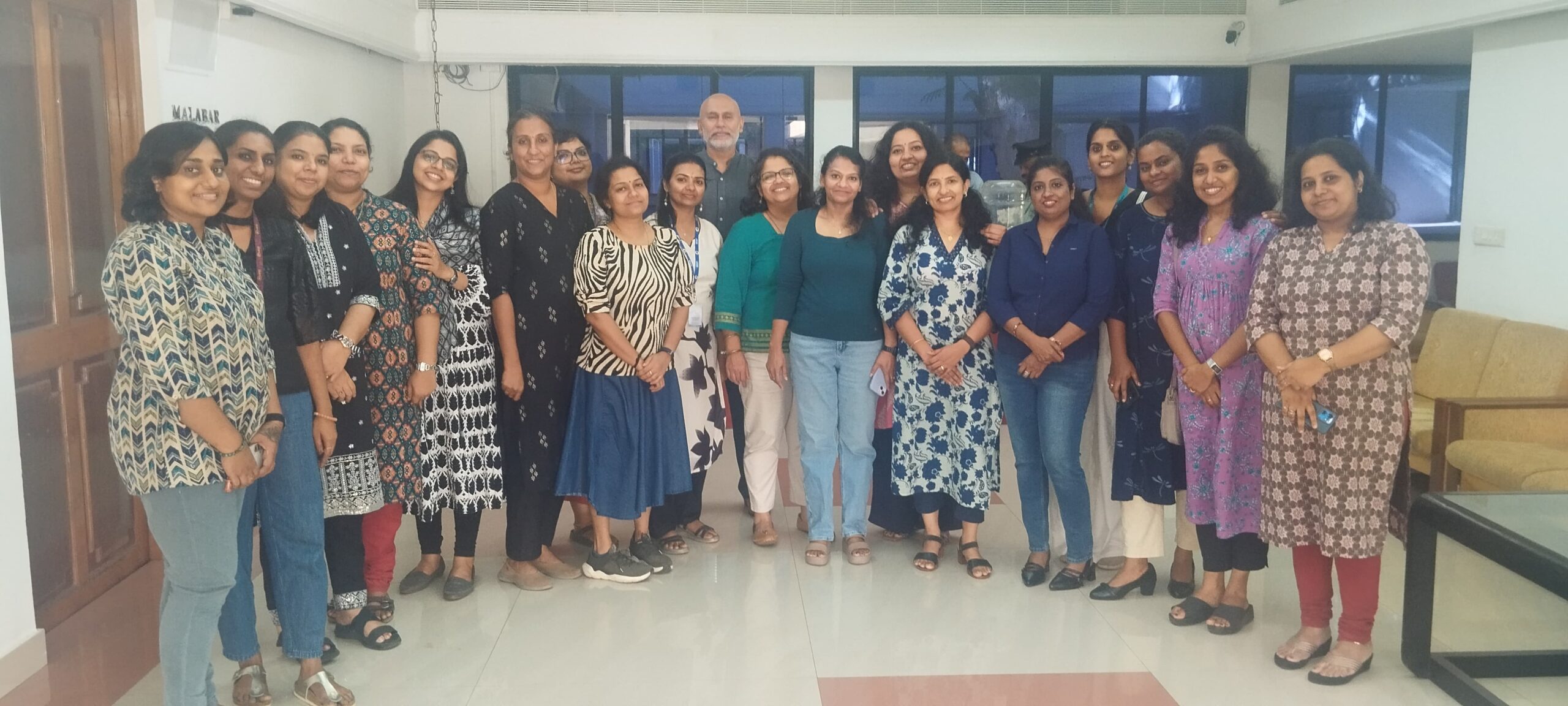
Celebrating 6 Years Of Leadership Sessions with High Potential Women Managers/Leader Groups

It is a proud feeling to complete my sixth batch/year, facilitating annual leadership development sessions, and supporting high potential women managers in their leadership journey, at the Women Inclusive In Technology (WIIT) Accelerated Leadership Program. Participants actively understand what constitutes leadership, reflect on their leadership journeys and development focus.

Program participants come from various technology organisations in Kerala.
Sessions are normally conducted in Technopark, Trivandrum, Kerala.
This has also been an important and meaningful personal metric for myself, to positively impact our local ecosystem.


C-Level Leadership Trends from Korn Ferry and Related Reflections

The grass is not as green as it looks when it comes to corporate C-level leadership. Are C-suite jobs becoming more complex and short lived? If you are an aspiring C-suite leader, what does this mean for you?

These are selected notes from recent Korn Ferry Insight articles:

* According to recent updates from Korn Ferry, around 222 CEOs (US) left their roles in January, the highest number for the month in at least 23 years.  This comes after a record 2,221 top bosses – at US public, private, or government organizations – left their posts in 2024, a figure which itself topped the prior record of 1,914 set a year earlier.

* Disruption is a major cause of CEOs leaving, and then the CEO actually leaving is probably impacting that disruption further. Directors, themselves under pressure from a surge in activist investors, are showing less patience with CEOs who aren’t delivering positive results. At one point in 2024, nearly 40% of CEOs who left were forced out.

* When a CEO quits, it’s almost always a shock to the system. “All types of dynamics surface calling the success of the company’s future into question”.
As a result, experts say that firms need to make a special effort to develop promising talent. That may mean identifying potential successors who are currently working two or even three layers below the CEO job. 

* Firms also seem to be reducing C-suite roles by collapsing and combining positions. Some tech companies have merged the CFO/COO roles, for instance, while others have folded CCO duties into those of the CMO – a role that has added responsibilities for sales, customer experience, and more – or have rebranded them under titles like CRO. This may be because combining roles could enable firms to respond faster to changes involving markets and competitors. The role-merging has happened thus far only on a small but noticeable scale.

* Developing C-suite leaders with cross-functional experience also helps firms build a pipeline of ready successors. Still, experts caution that consolidation in the C-suite runs risks. The executive who’s taking on the additional responsibilities might not perform well in their new role. Burnout is a risk.


These are some of my reflections:
1. Companies have to increase focus on consciously developing and retaining leaders. Only focused efforts lead to positive outcomes at a systemic level.
2. A CEO change mostly leads to further leadership, talent and structural organizational changes. This can lead to major disruptions for talent, especially when uncertainty is high. Key talent engagement and retention should be on top of a leader’s agenda in such environments.
3. When a senior leader takes on multiple functions, time and attention tends to become a major challenge. Consciously or sub consciously, some teams and topics will get lesser leadership attention, leading to frustration for those members. This could lead to further disengagement. In such scenarios, it becomes critical for C-level leaders to ensure a strong second level of leaders, who can lead with high autonomy.
4. There seems to be increased chatter about broader job cuts in organizations in 2025 as well (which normally accompanies organization, work structure changes across all levels). eg. even when teams get consolidated, there are leadership and direction changes, which end up impacting even the junior levels.
5. Based on the trend of consolidation of leadership responsibilities, cross-functional/generalist experience could be back into serious leadership development focus.

Sources:
* The Shrinking C-Suite?; March 18, 2025; Korn Ferry Insights
* The Great CEO Exodus… Continues; March 12, 2025; Korn Ferry Insights

Older posts

© 2026 Lead-Wise

Theme by Anders NorenUp ↑