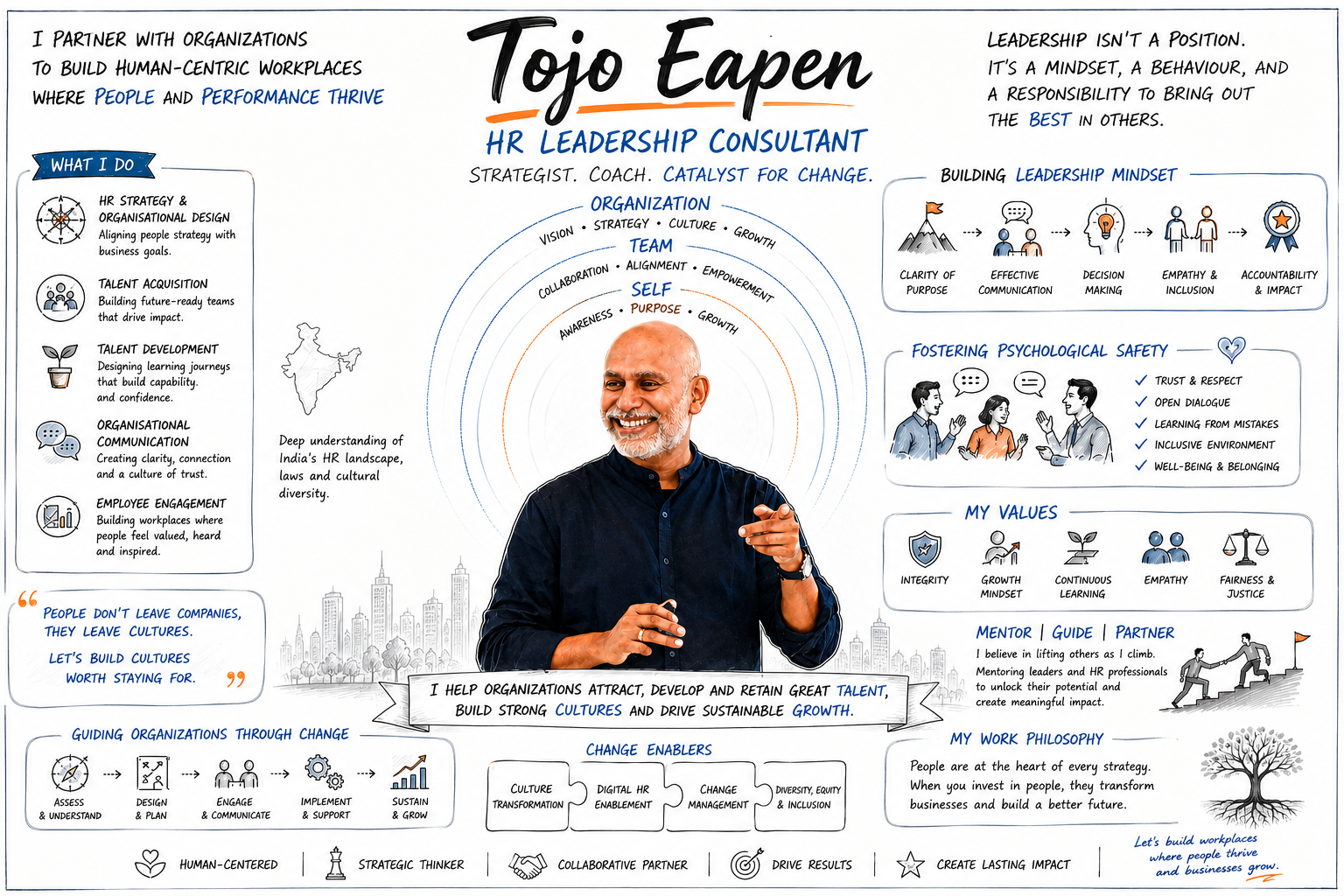
After observing a post on LinkedIn, I thought it would be interesting to experiment with Chatgpt, with my own poster and branding. This was an interesting output from that exercise. It seemed to be based on the interactions and knowledge that Chatgpt gathered from previous discussions as well.
This seems to be a great example of how AI can help individuals by consolidating multiple perspectives and with a great presentation.
There are lots of discussions and debates nowadays regarding the evolution of work with growing AI impact.
Noticed a very interesting article, “Is AI Smarter Than People? It’s complicated”, in the Wall Street Journal (source below). It also highlights inputs from a related experiment, and the human qualities most likely to matter in the evolving world of work.
These are selected notes from the article. ———- * My research suggests that we’ve been asking the wrong question and drawing the wrong conclusions. * In an experiment relating to prediction market accuracy, the hybrid teams (human-AI) reached insightful conclusions that neither a human nor a machine could have produced on its own.
* It’s not that these people were more intelligent than others in the study. They demonstrated two important qualities: perspective-taking and intellectual humility. –Perspective taking – ability to genuinely inhabit another point of view. –Intellectual humility – ability to recognize the edge of your own knowledge and sit with that discomfort rather than trying to rush to fill it. * Perspective-taking requires requires genuine curiosity about minds other than your own. Intellectual humility requires a kind of emotional courage: the willingness to feel uncertain, even a little foolish, in the presence of something or someone that seems very sure of itself.
* These are not the soft skills we typically celebrate. * What my experiment suggests is that the human qualities mostly likely to matter are the uncomfortable ones: the capacity to be wrong in public and stay curious; to sit with a question…to read a confident, fluent response from an AI and ask yourself, “What’s missing?”…to disagree with something that sounds authoritative and to trust your instinct enough to follow it. * We don’t build these capacities by avoiding discomfort. We build them, by choosing it, repeatedly, in small ways. * Most AI chatbots today default to easy answers which is hurting our ability to think critically. *…the divergence I worry about – the quieter process of people gradually outsourcing the judgment… * What can any of us actually do about it? Start with the reframe: The goal of working with AI isn’t to get the answer faster. It’s to find what you are missing…use AI as a savant collaborator to explore uncertainty. * Perspective-taking, intellectual humility and curiosity are traits that can be cultivated. ———-
Source: Is AI Smarter Than People? It’s complicated; Vivienne Ming (neuroscientist, cognitive scientist and author of “Robot-Proof…”); April 25-26, 2026
One area interesting to watch in relation to the U.S. visa changes, would be the international student flow towards the U.S., and potential financial impact (especially on the universities). Most students tend to seek continuity with work options and better opportunities, after their studies. These would be the short term impacts. In the longer run, this may also hold potential for few ripple effects beyond that (including on local small town economies that are university based).
According to a Wall Street Journal article couple of days back, * The US enrolled a record 1.1 million international students in 2023-24 – who contributed $43.8 billion dollars to the US economy through tuition, food and living expenses, according to NAFSA, Association of International Educators. * International student enrolment is sagging at many universities, particularly at the Masters level (due to increased scrutiny of visa applicants, policies aimed at shrinking the number of international students and shifts in the technology job market). * As per the article, some universities that are very well know (Princeton, Cornell, Caltech) said their international enrolments are similar to prior years but others are seeing clear declines.
Therefore, it seems like the long tail of the remaining universities would be the ones to watch in the coming year(s).
Source: Colleges Rush To Retain Foreign Students; Sara Randazzo; September 23, 2025; The Wall Street Journal.
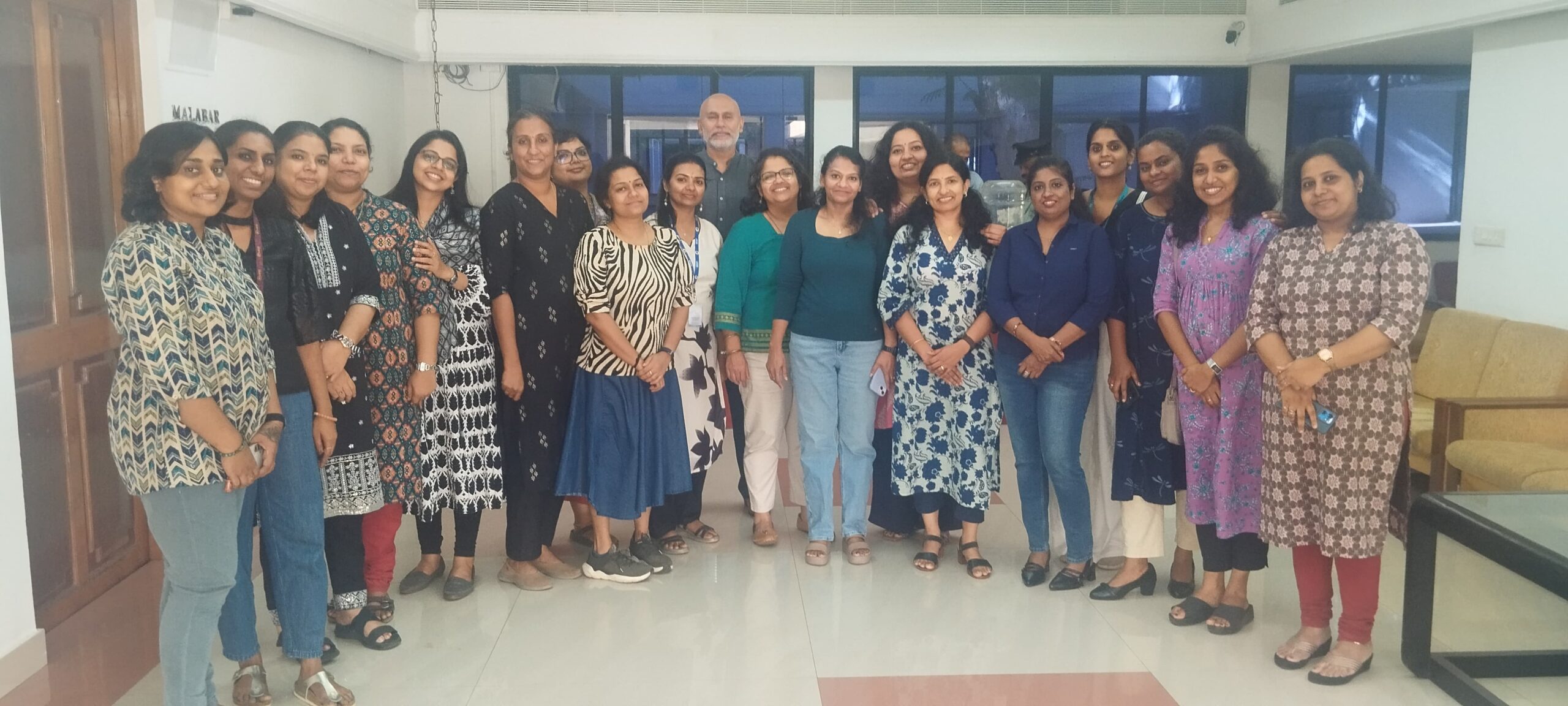
It is a proud feeling to complete my sixth batch/year, facilitating annual leadership development sessions, and supporting high potential women managers in their leadership journey, at the Women Inclusive In Technology (WIIT) Accelerated Leadership Program. Participants actively understand what constitutes leadership, reflect on their leadership journeys and development focus.
Program participants come from various technology organisations in Kerala. Sessions are normally conducted in Technopark, Trivandrum, Kerala. This has also been an important and meaningful personal metric for myself, to positively impact our local ecosystem.
India is already among countries with the greatest demand for data analytics from the workforce, around 17% of job postings already looking for data analytics skills. Looks like the India job market is evolving fast, even in comparison with rest of the world. This also holds valuable food for thinking for the education ecosystem and how much/how well they cater to these requirements.
The snapshot above is from the Business Standard (based on data from Cornerstone) yesterday.
With all of the data push, there is an ever increasing need for focus on quality leadership, management practices and processes, and employee health and well being.
Recent data from BCG on corporate transformation and link with total shareholder return(TSR) hold valuable food for reflection. We see transformation initiatives in most companies nowadays, especially when leadership changes happen.
Selected Notes from the article:
* The empirical patterns of transformation are quite stable: At any point in the past 20 years, roughly 30% of companies significantly underperformed their sector for a period of multiple years, making transformation a necessity for performance reasons. * Successful transformations are the exception, rather than the norm, even when measured on very modest criteria. Only 26% of corporate transformations successfully created value in both the short and long terms. More than 70% of companies fail to outperform their industry peer group average in both the short (one year) and long term (five years), after a previous performance downturn period (numbers quite similar to the findings in 2018 report). Sustainable value creation through transformation remains so rare.
* Pre-emptive transformations create significantly more value in the medium and long run. * A leadership change during a transformation is associated with higher TSR performance over the five-year time horizon. The positive impact is even higher if the new leadership comes from outside of the company. However, a change in leadership is not a guaranteed success driver. * You cannot cut your way to greatness: differential growth is critical to sustained value creation. * Achieving sustainable growth and a future-proof operating model requires entering transformations with a long-term orientation, rather than merely focusing on addressing performance woes or catching up to peers in terms of technology stack or organizational best practices. Beyond mindset, culture, and metrics, a long-term orientation also means investing in the exploration of new ideas that could be the basis of future advantage. * Putting a formal transformation program in place, scale of the program and the willingness to invest in change matter. Formalizing the transformation entails defining a clear governance and process-or setting up a dedicated transformation office-for coordinating and tracking progress on change initiatives, as well as regularly communicating it to the executive leadership team so that roadblocks can be addressed promptly. Moreover, it may mean putting in place a chief transformation officer to helm an ambitious change effort, which our prior research shows can improve transformation odds significantly. The role must be designed appropriately and filled by someone who is persistent, vigilant, and flexible—and who is trained for the job.
Source: Five Truths (and One Lie) About Corporate Transformation, April 12, 2024, BCG
Artificial Intelligence (AI) can help usher in a new era of human resource management, where data analytics, machine learning and automation can work together to save time, and provide information, insights and recommendations in near real-time.1 According to Gartner, 81% of HR leaders have explored or implemented artificial intelligence (AI) solutions to improve process efficiency within their organizations. Gartner expects generative AI solutions to become embedded in current and new HR technology providers in the next one to three years. Generative AI could first begin to appear in the natural language processing (NLP) space (virtual assistants, chatbots, data processing etc.).2 The Oracle and Future Workplace AI at Work Global Study 2019 found that 50% of workers were already using some form of AI at work.3
Potential Shifts in HR Ways of Working
Artificial intelligence will have an effect on the work conducted by the HR function, across the employee life cycle. This includes HR operations from onboarding to exit, spanning across talent acquisition, employee engagement, learning and development, total rewards, talent management and service management.
In talent acquisition, an AI algorithm could predict which sourcing channels would most likely attract the right candidates for a specific skill set or role, optimise sourcing spend, and suggest employee profiles which may hold higher probability of success and fit for an organization.4 On the other side, it could alert the candidates with the right skill sets to available jobs. In learning and career development, employees could get curated development and personalized recommendations that maximize career potential. Instructional design could also be impacted, with increased accessibility, flexibility and convenience. In compensation, AI could help analyze a wealth of data points relative to the local market and competitor data. It could provide analytics and recommendations on relevant benefits. AI-powered HR chatbots or assistants could help empower employees with quick, efficient service support.5 Real time inputs on performance at the individual, team and organization level, engagement and culture, leading to indicators on organizational outcomes would be impactful. As the size of HR teams get smaller, AI assistants could guide managers and leaders on right approaches for managing performance and high performing teams. Available external environment data could be analysed for proactive decisions and actions. Applications that use generative AI capabilities (such as ChatGPT, Bard, DALL-E) could improve the efficiency of the HR team and function.
Talent Strategy
Since fewer people will be needed to complete the same amount of work, it would be realistic to anticipate lesser headcount needs over time. The nature and content of work itself would change. Jobs disrupted by AI may need to be redesigned to encompass broader, comprehensive competencies with a more compelling employee value proposition.6
To meet these quickly evolving needs, leaders may need to revisit the six kinds of investments (six ‘B’s) needed to upgrade talent – Buy, Build, Borrow, Bound, Bounce, Bind.7 For the Build/training approach, organizations may focus on upskilling, reskilling and new skilling initiatives. Reskilling involves training employees on an entirely new set of skills to prepare them to take on a different role. This typically occurs when workers’ previous tasks or responsibilities become irrelevant. As opposed to reskilling’s 180-degree pivot, upskilling occurs when workers improve upon existing skills and deepen their abilities and impact within their area of expertise. The term new skilling represents all types of continuous learning to help build high-demand skills. A new skilling mindset keeps both a workforce and a company agile by ensuring learning initiatives are relevant to future business objectives.8 Performance expectations could vary significantly in newly configured roles and environment.
AI would influence employee expectations about how employees interact with HR teams and tools. Over time, this shift will lead to rethinking the purpose, objectives, skillset and structure of HR roles and the overall function. Along with the increased requirements, leading/managing with the updated knowledge of psychology, neuroscience, culture, change, leadership, organization behaviour, business acumen and technology will give influential HR leaders and teams a distinct advantage. Change management could become a critical competency requirement for the whole team.
Workforce Planning
Since AI investments will lead to the obsolescence of many tasks, while creating the need for new skills and roles, this shift involves proactive planning, change management and updating the capabilities of the overall workforce. Proactive workforce planning based on a deep analysis of phases of change becomes critical for the success of any organization. New, specialized, complex jobs may emerge where generative AI and related technologies are used, resulting in competitive advantage.
Culture Intersection
A major change like this cannot be possible without shift in mindsets and behaviours. This inevitably intersects with organizational culture elements. HR teams that proactively assess, plan and facilitate the culture and mindset shift for the organization would play a fundamental role in facilitating this transformation successfully.
Concerns
While AI is creating excitement, there are concerns about aspects like accuracy, privacy, bias and reliability. Any information posted may be used to further train the model, raising concerns about confidentiality. Generative AI learns based on historical data, and historical patterns of data may reflect biases. Instances of bias in AI tools have come to light, offering case studies in the limitations of machine learning (eg. talent acquisition tool bias).9 Recent guidance from The Equal Opportunity Employment Commission (EEOC) in the U.S. clarified that bias in AI tools may violate discrimination protections, and employers who use them could be held accountable.10
Therefore, it becomes critical to involve all points of view while planning and implementing AI adoption. While the value and transformation potential of GenAI are real, so too are the technical, implementation, and change management challenges. The time-saving potential can vary significantly based on industry-specific contexts. Consulting firm BCG recently found that support functions such as technology, operations, and customer support showed the highest potential productivity gains from GenAI deployment. Looking at GenAI activities across the company will help to ensure that the sum of efforts is greater than its parts, leading to transformative change rather than incremental refinement.11 The true potential of mature AI solutions may take time. Initial rollouts might result in less-than-desired experiences. Organizations must also acknowledge and guide about potential risks of generative AI and using sensitive or confidential data. A recent incident of sensitive data leak from a large corporation accidentally to ChatGPT, led to the company crack down on usage of the generative AI services.12 AI is also susceptible to hacking. The ethical and fairness elements have to be thoroughly assessed and analysed. Government regulation, policy, and international standards also play a fundamental role in our society.13. Labor relations and unions could also play a key role in this transformation.
While this is an exciting time for HR leaders and teams to be part of this evolution, prioritising change agility, curiosity, experimentation, growth mindset, risk awareness and development for self, team and the organization will increase chances of success. Modernizing talent capabilities within the function will become non-negotiable. When unique human capability, diversity and potential are augmented (not replaced) by AI, the stage for immense creativity and innovation is established. It looks clear that this is the beginning of a long, transformational journey and any future HR strategy without incorporating AI would seem incomplete.
ChatGPT – Inputs about AI Applications in HR
Since this is an article on AI, I gathered consolidated inputs below from ChatGPT regarding AI applications in HR. Readers may assess the similarities and differences between the above and below sections. I see the value in augmenting insights, while maintaining the creativity, unique connections, thought process and wisdom of an expert. Even here, the ability to ask the right questions or prompts through specific inputs seems important. If you want good outputs, you may need to provide good inputs, apply experimentation and thinking.14
AI applications in HR are designed to streamline processes, enhance decision-making, and improve overall efficiency. Here are some common AI applications in HR:
Recruitment and Talent Acquisition
Resume Screening: AI algorithms can analyze resumes quickly and efficiently, identifying relevant qualifications, skills, and experience.
Chatbots for Initial Interaction: AI-powered chatbots can engage with job candidates, answer basic questions, and even conduct preliminary interviews, saving time for both candidates and HR professionals.
Predictive Analytics: AI can analyze historical data to predict which candidates are more likely to succeed in a particular role, improving the quality of hiring decisions.
Employee Onboarding
Virtual Assistants: AI-powered virtual assistants can guide new employees through the onboarding process, providing information on company policies, procedures, and answering common questions.
Employee Engagement
Pulse Surveys:AI can analyze employee feedback and sentiment from surveys and other sources to gauge overall engagement levels and identify areas for improvement.
Personalized Learning:AI can recommend personalized training and development programs based on an employee’s skills, performance, and career goals.
Performance Management:
Feedback and Recognition: AI can facilitate real-time feedback and recognition, helping managers provide timely acknowledgment of employee achievements.
Performance Predictions:Predictive analytics can help identify patterns in employee performance data, allowing HR to anticipate potential issues and take proactive measures.
HR Analytics:
Predictive Analytics for Turnover: AI can analyze various factors to predict which employees are at a higher risk of leaving the company, allowing HR to take preventive measures.
Workforce Planning: AI can assist in forecasting future workforce needs based on historical data and market trends.
Employee Assistance and Support:
Chatbots for HR Queries: AI-powered chatbots can handle routine HR queries, providing quick and accurate information to employees.
Wellness Programs: AI can support employee well-being by providing insights into stress levels, workload, and suggesting personalized wellness programs.
Diversity and Inclusion:
Bias Detection: AI algorithms can help identify and minimize unconscious biases in job descriptions, recruitment processes, and performance evaluations, promoting diversity and inclusion.
Compliance and Risk Management:
Monitoring Compliance: AI can assist in monitoring and ensuring compliance with HR policies and legal regulations, reducing the risk of non-compliance.
Implementing AI in HR requires careful consideration of ethical concerns, data privacy, and the potential impact on the employee experience. However, when used responsibly, AI can significantly enhance HR processes, allowing professionals to focus on strategic initiatives and creating a more engaging and efficient workplace.15
We live in a world where there are many who claim to be experts or share expert opinions on multiple topics. The amount and impact of ‘pseudo-experts’ seem to be increasing. On all forms of media, lots of expert opinions on varied topics are shared constantly and many people buy into them and trust quickly without realising the quality of information, the individual who is sharing or the actual source. As a result, low quality or unreliable perspectives find lots of eyeballs and mindspace.
I wanted to share 3 tips that have helped me in figuring out right experts, better quality information and perspectives.
1. Understand background and experience, both of the expert and the source
Look for the background, expertise and experiences of the individual(s) in the relevant areas. The quality, depth and breadth of those experiences and their contributions track record over time also matter. Look for how deeply they may have studied that area and shared quality insights. A basic search on the internet or LinkedIn can help. Do note that the number of connections or titles don’t translate to being an expert.
Ideally, there needs to be a mix of conceptual/theoretical and practical experiences for high quality insights and perspectives. Being an expert in one area does not translate automatically to being an expert in other areas. We tend to see that error or bias quite a bit. It also helps to observe who have liked/endorsed them or their insights or shared further. Credibility has to be developed over time and with consistency.
If studies and researches are quoted in articles or conversations, it always helps to see who or where the research was undertaken. Ask the logical questions about the relevance and environment of those studies. The quality of the institution or individuals who undertook the study can be an important factor in the validity of results that are quoted.
2. Openness to alternate viewsand discussions
The best experts are open to listening, discussing, learning and debating alternate or contradicting views because they understand there are multiple variables to explore, some that they may not have foreseen or others that may be worth learning or engaging further. An open mindset to a quality discussion and exploration improves the outlook of an expert perspective. Keep in mind that we generally tend to read and believe in topics that we want to believe in or have an internal bias towards. We relate better to certain conversational and writing styles.
3. Observe patiently and do your own research over time
Hold off from jumping to conclusions from one expert opinion or view, unless you have done your homework and looked across multiple expert views or studies. The predictiveness of quality is better if you have been tracking someone’s work over time. Even then, it helps to maintain a broad perspective and expand your senses to multiple experts. If the opinion relates to your own area of work, it helps to reflect on your experiences and the links to the perspectives shared.
As a result of all these, the quality of your insight and perspectives will improve over time and chances of being misled will reduce substantially. Your quality of thinking, actions and growth will be on a better curve.
Have other approaches worked for you?
“Logic, it is often said, is the study of valid arguments. It is a systematic attempt to distinguish valid arguments from invalid arguments.” – William H. Newton-Smith Logic: An Introductory Course (goodreads)
It is safe to assume in today’s world that a noticeable portion of professionals could experience at least one Mergers & Acquisitions (M&A) scenario during their career. After having worked with few large scale organizational M&A/Change scenarios with leadership teams (on both sides), I thought of sharing few reflections for those who may go through similar environments. These may look simple but I have noticed that they appear in different environments repeatedly and if addressed, can make a significant difference. A key aspect is to figure out how to convert these elements to practices at an individual or systemic level. If you don’t get these fundamentals right, the seemingly bigger topics like strategy and execution become less relevant for an individual.
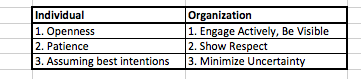
There are couple of perspectives to consider when we think about mindset and related behaviors – one is from the individual perspective and the other is organizational or management perspective.
Typically, major changes like an acquisition bring to the forefront our emotions at an individual level. Both positive and negative feelings on the acquiring company and acquired company exist and the emotions evolve in different directions through the journey. Most times, uncertainty in the environment drives our brains to first pick up and respond to all the seemingly looming threats in the new environment. Therefore, it is even more important to try to understand, develop few mindsets and balance our thinking to help manage through these scenarios. All this takes a lot of effort and support.
In an M&A environment, there tends to be lots of uncertainties and related emotional ups and downs for many employees. At an individual level, it helps to be prepared and develop capabilities to manage through such environments. This is relevant to employees on both sides, whether acquired or acquiring company side.
The three key elements to consider from an individual perspective are:
1.Openness
During an M&A situation, many things related to one’s immediate environment may change – leaders/managers, reporting lines, organization structure, ways of working, peers, team members etc.. There will be a lot of readjustment mentally, with many potential new working styles, strategy, systems, processes and even ways of working to adapt to. Keeping an open mind without jumping to judgments, to all the new people and organizational scenarios are critical elements for success. This also reduces stress for self and people around.
2. Patience
Changes and complexities may seem continuous and non stop. Ability to manage through such situations patiently come in very handy. Many times, answers may not be available. It is important to not get frustrated during such times and clarify, ask questions with an open mind and engage in a dialogue. It is helpful in such instances to build a balanced state of mind through conscious practices of taking breaks, not getting wound up in certain difficult instances, seeking support, taking time out with an awareness practice.
3. Assuming best intentions
Forgiving and forgetting unpleasant or uncomfortable situations help to move forward and not get stuck in emotions. Sometimes, things may not work out well for an individual. Sometimes, people may not behave in a manner that feels acceptable. There may differences in understanding on either side. In such situations, it helps is to engage in an open and respectful dialogue, not assume the worst automatically, stay connected to one’s support networks, find a way to discuss feelings, try to leave negative thoughts behind, and reframe/refocus on the positives and way forward. One needs all the support from support networks, self awareness, reflection and intense focus on next steps during such times to avoid falling into a (sometimes self created) rut of frustration. Coaching or mentoring support becomes even more valuable during such times.
While being prepared with the relevant mindsets, it is also important for an individual to map out the risks, related actions and continuity in work and career. Like companies, individuals also need their own strategies for careers and determining what’s right for them.
There are also three elements to consider from an organizational/management perspective.
1.Engage Actively, Be Visible
It is especially important to know on the acquiring company side especially, that most of the employees irrespective of job level, will feel high degree of uncertainty and have lots of questions. It is important to acknowledge that many are first concerned at a human level to support themselves and their families. Leaders, by nature are the first set of people employees look up to for guidance, assurance and solutions. At a minimum, engaging actively and visibility across sites indicate caring and shared concern. This translates to high or low loyalty.
2. Show Respect
Respect can be visible in different ways. At a starting level, avoid the ‘Us’ and ‘Them’ mentality in all leadership conversations. This naturally takes time but when the leaders adopt “We are all one” reinforcement in conversation and actions, the rest of the organization tends to follow. This could reflect in how people feel they are treated or trusted, how the communications flow, or how the processes change. It is really important to take the time before giving ‘do it our way’ guidance. It would be in the best interest of both organizations to explore the best way to adopt the right approach. This also has a direct link to engagement and loyalty.
3. Minimize Uncertainty, to the extent possible
It is practically impossible to have answers to all the questions but it helps to reassure and communicate with employees as the topics are being worked on. At a minimum, it helps to share the high level plan or thinking. Openness to sharing and discussing from an organizational perspective also help a lot in engagement and gives reasons for employees to trust. This needs to be active communication and clarification. Using multiple forms of communication and repetition can help a lot to reinforce.
When these three elements come together at the organizational level, tremendous progress can be made during integration phase.
Fundamentally, it is really important for the leaders on all sides to think deeply and work out the change plan elements to ensure engaging listening and communication to support successful integration and business sustainability for the long run. Assuming the acquisition objective is to maximize value for combined organization and not to shut down the acquired business, it is in the best interest to be prepared on the fundamental mindset to build and support the whole organization. Difficult decisions are inevitable but most times what sets the tone and expectations for employees is the ‘How’ more than the ‘What’.
Any M&A or large scale change is really complex. No two organizations or environments are the same but adoption of these fundamental principles can help a lot in different environments. The process of applying them may differ and depend on different factors.
It can also be really time and energy consuming for the people involved to work through this, especially for the leaders. Therefore, the need to find a healthy balance and perspective during those times become even more important.
If you have had experiences in similar environments, what else would you suggest? Are there other questions or elements that come to your mind?
I’ve found Bill George’s writings on leadership to be deeply thought provoking – based on his personal experiences, as corporate leader (CEO-Medtronic, EVP-Honeywell), board member, mentor and teacher (Harvard).
The following selected notes are from his article, ‘Reflections On Fifty Years Of Leadership’ (available in the free ebook, Lead True -link shared below). These apply to developing organizations and leaders in all environments.
As I reflect on the past half-century, enormous changes have taken place in organizations, their leaders and our expectations of these leaders. Many formerly great organizations have fallen by the wayside, as new ones have sprung up to replace them. Economists often attribute this phenomenon to rapid changes in technology and markets, using phrases like “creative destruction.” I beg to differ with them. If there is one thing of which I am certain, it is that the difference between successful, enduring organizations and those that disappear is the caliber of their leaders – at the top and throughout the organization. Among the most important qualities for leaders, these two stand out: adaptability and courage.
All of us will experience great crucibles in our lives from which we can discover what is real for us: our True North. Sometimes in life bad things happen to good people. There is deep learning in these experiences if we take the time to discern their meaning and reframe them to make our lives richer and more meaningful.
By choosing leaders for charisma, image and style – subjects often taught by business schools and leadership experts in the 20th century – we were overlooking far better leaders with character, integrity and substance.
The defining quality of today’s leaders is their authenticity – their ability to know themselves and discern their True North. Authentic leaders are secure within themselves. They do not need external validation to prop up internal insecurity. Instead, they have worked hard to develop the self-awareness to lead with clarity of purpose, practice their values every day, discern the “sweet spot” where their motivations merge with their strengths, build enduring relationships, and inspire and empower others to rise to the challenge. They know what it means to LEAD TRUE: to have the courage to adapt to any challenge while still being true to themselves.
There are many more valuable notes for reflection and learning throughout the book. I would highly recommend to read and reflect.
Source: Reflections On Fifty Years Of Leadership, Lead True, Bill George, eBook; http://www.billgeorge.org/wp-content/uploads/2018/09/Bill-George-Lead-True-eBook.pdf
Leadership Coach, Consultant, HR Leader with diverse, global experiences (U.S.A, Europe, APAC).
Master of Human Resource Management from Rutgers University, New Jersey, U.S.A. Recipient of the U.S. Garden State Council SHRM HR Leadership Scholarship.
Bachelor of Technology in Civil Engineering from College of Engineering, Trivandrum, India.
Certifications: MBTI, Hogan, RBL Leadership Code, SHL 360, Team Management Profile, NeuroLeadership Results & Team Coaching.
Facilitated coaching sessions, workshops and programs with multicultural teams in Helsinki, London, Berlin, New Delhi, Bangalore, Kerala, in addition to multiple Global/Virtual sessions.
Mission: Enable healthy, purposeful, and impactful organizations, through leadership knowledge and wisdom.


















Recent Comments