I was going through the 2023 Harvard Business Review article by London Business School professor, Herminia Ibarra and thought the following notes are valuable to share. These provide valuable advices and notes for reflection in a fast changing world of work.
* With increasing frequency, we are changing jobs and careers, pursuing opportunities and making time for rest and restoration.
* Need to learn how to make the most of the frequent transitions.
* You’re likely to experience the transition as an emotionally fraught process.
* Change is hard primarily because of the lack of institutional support and loss of professional identity.
* Usually, we fail to change because we don’t know how to go about it.
* Emotionally, career change is a roller coaster ride because it puts you in a “liminal state” – where you must navigate between a past that’s over and a future that’s uncertain.
* You must embrace liminality. You have to be willing to get and stay lost for a while.
* 3 ways to make that process easier – experiment with divergent possibilities while delaying commitment to any one of them, adopt ‘either-or’ thinking (exploring while maintaining something, at least initially), and building new connections and relationships of kindred spirits.
* We all need a secure base from which to explore the unknown and turn painful feelings/experiences into sources of growth.
* Self-reflecting out loud” is important. We need to get comfortable with the “learning plot” – our story of ongoing struggle and adaptation. As constant reinvention becomes the norm, the stories that define us have no start or ending.
* Proficiency in being liminal will increase your capacity to successfully navigate present and future transitions.
Source:
Why Career Transition Is So Hard; Herminia Ibarra; Harvard Business Review; November-December 2023
PURPOSE & IMPACT
Tag: Coaching
Many people face loss and experience grief in different ways. They move through related feelings and often feel lost. A loss can come in different ways.
Awareness of this topic and how to work through it can help a lot, even to being present for someone going through a loss.
We have heard about the five stages of grief – denial, anger, bargaining, depression and acceptance.
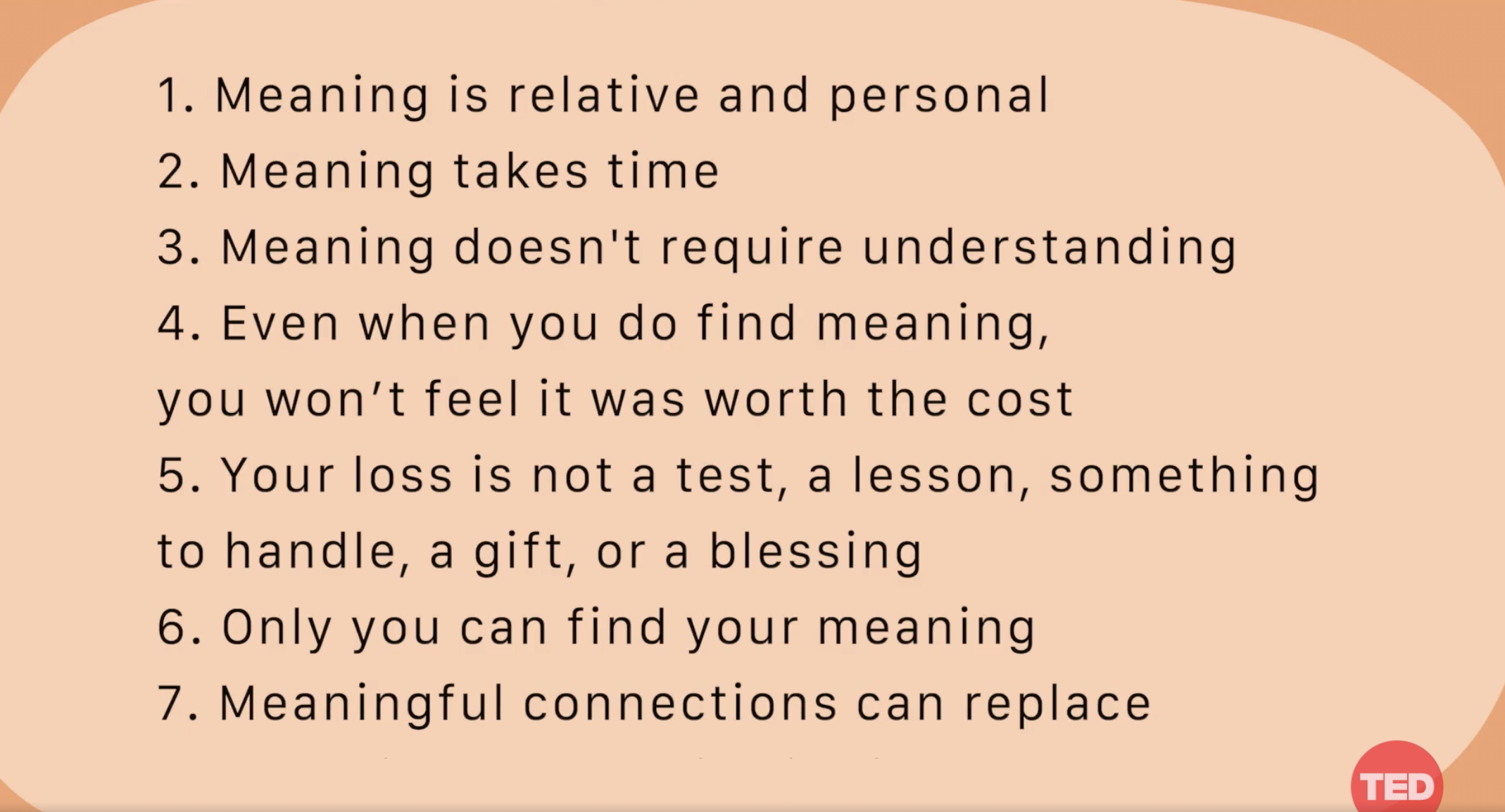
This is a video, discussion with grief expert, David Kessler that gives valuable awareness and context on the topic. David was a co-author with Elizabeth Kubler Ross (famous for her work on five stages of grief) on the book, On Grief And Grieving. He highlights a sixth stage that is very important – finding meaning.
According to David, there are seven factors that guide the concept of meaning. This is helpful to understand (from the video).
There is a 2011 HBR article with the title, “We Need More Mature Leaders”.
It definitely seems to feel that way while seeing many news articles and discussions nowadays.
While we can say a lot about mature leaders, how do we observe immature leaders/leadership? Here are some notes from “Understanding Leadership Maturity (John Mattone Blog, July 2024)”. The list is not comprehensive, there are surely many more. This also indicates where getting leadership coaching early could be helpful.
—
“Recognizing the signs of immature leadership is crucial for addressing and correcting these behaviors before they lead to significant negative outcomes.
Immature leaders are often emotionally reactive and have poor interpersonal skills, which can harm their teams and organizations.
If a leader does not possess maturity, the below signs may show:
* The impression that they simply do not care about the opinions or feedback of other colleagues.
* Refusal to listen to others and remaining stuck in their own ways.
* Constantly interrupting others without allowing them to speak about new ideas or feedback.
* Leaning on emotions, rather than facts, during challenges or obstacles within the workplace.
* Not paying attention to how they come off to others and how this impacts them.
* Using unclear messaging and communication creates confusion within the workplace, which could lead to conflict and mistakes.”
—
Some leaders don’t realise they need help and drive ahead, blissfully unaware. Others know but don’t care or use excuses, regarding why they can’t change but are still great/successful (while their teams suffer). There is much hope for the category of leaders (and their organisations) who are self-aware, identify the leadership behavioural gaps within themselves and work on getting better.
This is a video of my recent talk for engineering students and educators at an International Conclave, organized by the ICT Academy of Kerala, India. The key points covered here were shared earlier in a related blog post,
Prepare Students For Future World Of Work – 3 Behavioral Elements
About Tojo Eapen

Leadership Coach, Consultant, HR Leader with diverse, global experiences (U.S.A, Europe, APAC).
Master of Human Resource Management from Rutgers University, New Jersey, U.S.A. Recipient of the U.S. Garden State Council SHRM HR Leadership Scholarship.
Bachelor of Technology in Civil Engineering from College of Engineering, Trivandrum, India.
Certifications: MBTI, Hogan, RBL Leadership Code, SHL 360, Team Management Profile, NeuroLeadership Results & Team Coaching.
Facilitated coaching sessions, workshops and programs with multicultural teams in Helsinki, London, Berlin, New Delhi, Bangalore, Kerala, in addition to multiple Global/Virtual sessions.
Mission: Enable healthy, purposeful, and impactful organizations, through leadership knowledge and wisdom.
Contact


© 2026 Lead-Wise
Theme by Anders Noren — Up ↑









Recent Comments