Lead-Wise

PURPOSE & IMPACT

Page 3 of 15

Recognize Wisdom?

There’s a lot of information, knowledge and wisdom out there, easier accessible than ever before, probably a lot more than most can process.

In this scenario, the critical differentiator skill will start with the ability to understand and discern what’s more valuable, relevant and applicable. Knowing where to look, understanding the context/relevance, who you decide to follow, interpreting, applying/practicing in one’s own environment, reflecting on what worked/didn’t, figuring out alternative sources and approaches – all contribute to that differentiation.

If you think the approaches an AI agent suggests will resolve everything, there may be unpleasant surprises waiting. It may only be treated the starting point of an explorative journey.

A more impactful personal differentiation in a fast evolving world can only be possible through a combination of continuous learning, active reflection and diverse/enriching experiences.

This is why I think, even in an AI and information rich world, there is an important role/seat for real wisdom. It leaves an important question – is the number of people who can recognize wisdom reducing fast?

Could one recognize wisdom better as one becomes wiser?

The Risk of Blindly Following Successful Entrepreneurs’ Leadership Approach

In today’s world, there’s a tendency to glorify everything that an entrepreneur who is perceived to be successful does with their leadership approach. There are multiple risks in taking that approach.

The following notes from a recently published article remind us about it.

“…the most effective leaders aren’t radically transparent; they are strategically self-aware. They know when to adapt, how to filter, and which version of themselves is most useful in a given situation. If “being yourself” means ignoring feedback, resisting self-regulation, or broadcasting your every mood swing, it’s not authenticity, it’s self-indulgence. And when your decisions affect thousands of employees or millions of users, indulging your quirks becomes a liability, not a virtue.

In short, there is a fine line between charisma and narcissism, between vision and delusion, and between confidence and arrogance. When we admire entrepreneurs, we should separate their contributions from their character. Otherwise, we risk turning toxic traits into aspirational goals, and forgetting that success is not a moral justification for how you got there…”

-From “The four leadership qualities you should not admire in famous entrepreneurs”; Fast Company; August 5, 2025; Dr. Tomas Chamorro-Premuzic, Chief Innovation Officer at ManpowerGroup

Some Food for Reflection, Studies on Friendship

The topic of friendship has been in my mind during recent days.
It got me to revisit some notes from a very interesting March 2022 Atlantic article, “It’s Your Friends Who Break Your Heart” (by Jennifer Senior).

Does it hurt more when a friend treats you badly or doesn’t live up to your expectation?

Selected notes/food for reflection from the article:
* You lose friends to marriage, to parenthood, to politics-even when you share the same politics. You lose friends to success, to failure, to flukish strokes of good or ill luck. (Envy, dear God—it’s the mother of all unspeakables in a friendship) These life changes and upheavals don’t just consume your friends’ time and attention. They often reveal unseemly characterological truths about the people you love most, behaviors and traits you previously hadn’t imagined possible.
* …still left out three of the most common and dramatic friendship disrupters: moving, divorce, and death. Though only the last is irremediable.
* The unhappy truth of the matter is that it is normal for friendships to fade, even under the best of circumstances. The real aberration is keeping them.
* One could argue that modern life conspires against friendship, even as it requires the bonds of friendship all the more.
* This is how most friendships die, according to the social psychologist Beverley Fehr: not in pyrotechnics, but a quiet, gray dissolve. It’s not that anything happens to either of you; it’s just that things stop happening between you. And so you drift.
* Failures of reciprocity are a huge theme in broken friendships.
* Psychologist Julianne Holt-Lunstad discovered in 2003, when she had the inspired idea to monitor her subjects’ blood pressure while in the presence of friends who generated conflicted feelings. It went up-even more than it did when her subjects were in the presence of people with whom they had “aversive” relationships. Didn’t matter if the conversation was pleasant or not.
* Practically everyone who studies friendship says this in some form or another: What makes friendship so fragile is also exactly what makes it so special. You have to continually opt in. That you choose it is what gives it its value.
* Friendship is the rare kind of relationship that remains forever available to us as we age. It’s a bulwark against stasis, a potential source of creativity and renewal in lives that otherwise narrow with time.
* What do you do with friendships that were, and aren’t any longer?
By a certain age, you find the optimal perspective on them, ideally, just as you do with so many of life’s other disappointments.


There also seems to be a neuroscience connection.

“Brain neuroimaging study revealed that the brain areas that are activated during the distress caused by social exclusion are also those activated during physical pain. Thus, we have an explanation for the feeling of physical pain that accompanies emotional loss-whether that be the loss of a loved one or rejection by one’s social group.”
– Neuroscience. Feeling the pain of social loss; Jaak Panksepp

Importance Of Mental Health At Work

There was a recent important article/topic from the Business Standard newspaper, titled “Age of Anxiety”. The article discussed increasing cases and patterns of anxiety and mental health issues in our work environments.

It has become critical for all parties to not ignore mental health. Physical and mental health are important elements of optimal performance. Having some form of support system is critical for every individual and benefits all parties, including the employer. Even if employers take a cost focused approach, this will end up in increased healthcare and insurance costs very soon (if not already). Therefore, proactive thinking to address this benefits everyone.

Highlighting couple of notes from the article that require attention.:
* “The real need is for organisations to empower their people managers to foster psychological safety, where employees feel seen, heard and supported, not just as professionals but as people navigating the pressures of work and life.”
* Despite efforts, much of corporate India still treats stress as an individual issue, not a systemic one. But the growing number of tragic outcomes suggests that the status quo is no longer sustainable.

Celebrating 6 Years Of Leadership Sessions with High Potential Women Managers/Leader Groups

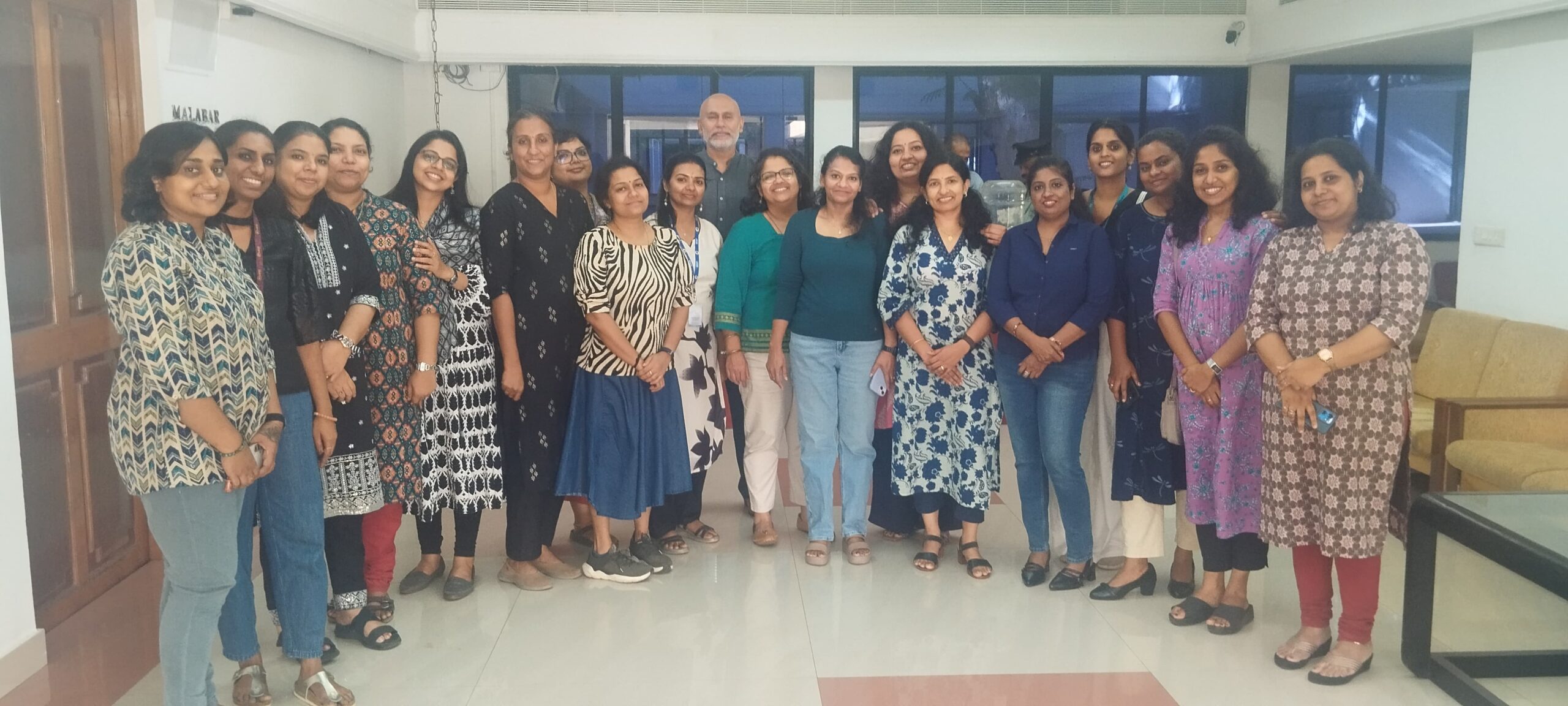
It is a proud feeling to complete my sixth batch/year, facilitating annual leadership development sessions, and supporting high potential women managers in their leadership journey, at the Women Inclusive In Technology (WIIT) Accelerated Leadership Program. Participants actively understand what constitutes leadership, reflect on their leadership journeys and development focus.

Program participants come from various technology organisations in Kerala.
Sessions are normally conducted in Technopark, Trivandrum, Kerala.
This has also been an important and meaningful personal metric for myself, to positively impact our local ecosystem.


Effects of Incivility on your business and people

What are the effects of incivility (disrespect/rudeness) on your business and people?

A TED Talk (video link below) from Prof. Christine Porath includes useful references on this topic, which are backed by research. There are also some positive behavioural examples (if you are wondering, as a manager or leader, how you could do better on this dimension).

Selected notes from the talk:
* Small, uncivil actions can lead to much bigger problems like aggression and violence.
* According to their study, incivility made people less motivated. 66% cut back work efforts, 80% lost time worrying about what happened, 12% left their job.
* For those who witness incivility, witnesses’ performance decreased, too…quite significantly.
* Incivility is a bug. It’s contagious, and we become carriers of it just by being around it. And this isn’t confined to the workplace.
* It affects our emotions, our motivation, our performance and how we treat others. It even affects our attention and can take some of our brainpower. And this happens not only if we experience incivility or we witness it. It can happen even if we just see or read rude words.
* This can be a big deal, especially when it comes to life-and-death situations. Researchers have actually shown that medical teams exposed to rudeness perform worse not only in all their diagnostics, but in all the procedures they did. This was mainly because the teams exposed to rudeness didn’t share information as readily, and they stopped seeking help from their teammates.
* The number one reason for incivility is stress. People feel overwhelmed. The other reason is because they’re skeptical and even concerned about being civil or appearing nice. They believe they’ll appear less leader-like. It’s easy to think so, especially when we see a few prominent examples that dominate the conversation.
* According to research from the Centre for Creative Leadership, number one reason tied to executive failure was an insensitive, abrasive or bullying style.
* It ties to one of the most important questions around leadership: What do people want most from their leaders? We took data from over 20,000 employees around the world, and found the answer was simple: respect. Those that felt respected were healthier, more focused, more likely to stay with their organization and far more engaged.
* Civility and respect can be used to boost an organization’s performance.
* When we have more civil environments, we’re more productive, creative, helpful, happy and healthy.

Are We Really Learning From Others’ Mistakes or Just Having Fun With Them?

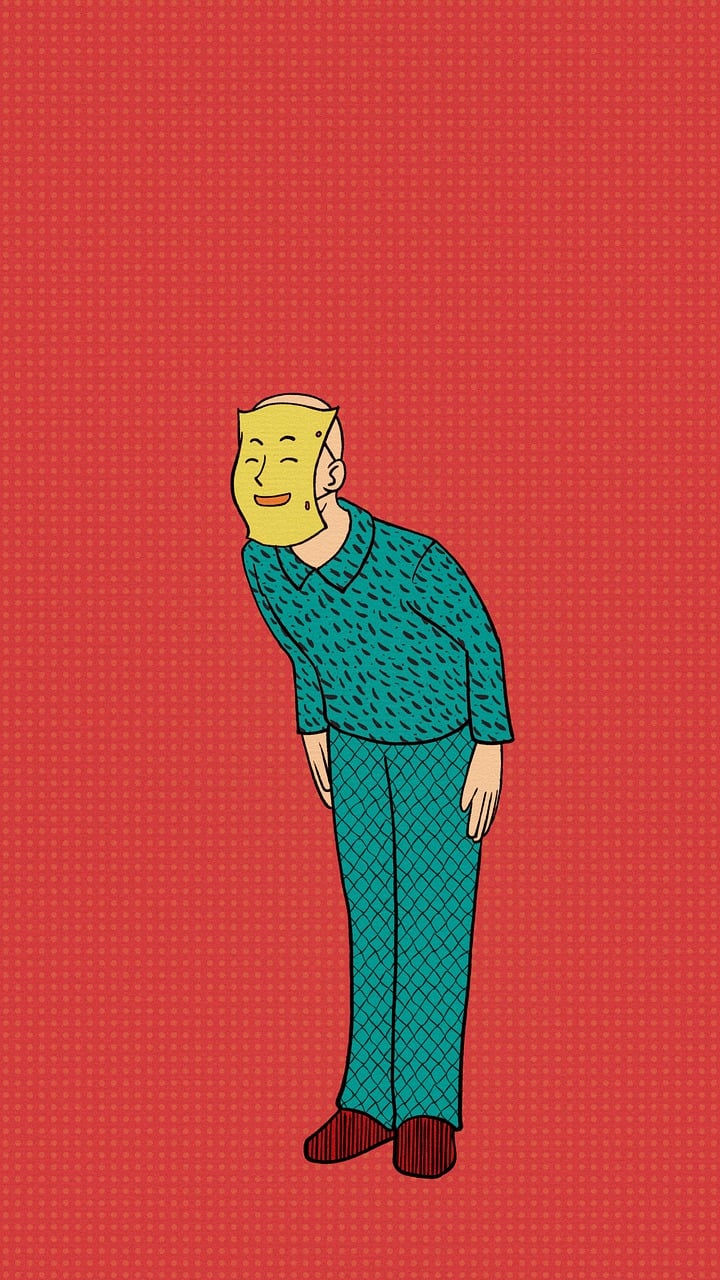
It is amazing and sad to see how much mileage social media posts are getting from discussing and commenting about other people’s mistakes or failures. Sadly, more people seem to be interested in those types of posts more, even on LinkedIn (perhaps related to our natural human interest in listening to stories and gossips).

Within a few days, a photo of two corporate leaders from a relatively unknown company in a Cold Play concert in the U.S. reached all corners of the world on all types of social media and were shared multiple times (still keeps appearing in feeds, tiring). This is not about justifying or supporting anyone’s actions but sharing a sincere concern/observation about how we celebrate someone else’s personal mistakes with high interest and energy. Envy may also be in play.

While it would have been pertinent to discuss the organisational aspects on professional networks, like critical conflict of interest, confidentiality impact, role of power dynamics in relationships, leadership trust erosion, flow of information, culture impact, role of the board, how organisations could manage such scenarios effectively (any one of them could have been more valuable discussions professionally), very few posts seemed to do that.

Public figures understandably get a lot more limelight, interest and accountability as they get voted to power by the public based on the promises and images they highlight. Leaders in any organisation as well are always under the spotlight because of the power they hold (smaller companies as well become case studies quickly). Perhaps, public organisations get increased focus for good reason, they are using public money. Leaders in positions of power everywhere tend to have a higher bar of expectations and role modelling. Expectations of privacy are limited. This is important awareness for leaders everywhere. At the same time, leaders are also human beings with emotions. Mistakes and errors in judgment can happen.

Do we also have a tendency to jump to conclusions and make judgments very fast in our current world?
Do we tend to celebrate other’s failures, while being reluctant to analyse our own and focus on becoming better human beings?

It’s also worthwhile to remember what Jesus Christ famously said, “The sinless one among you, go first: Throw the stone.”

Image Source: Pixabay; CDD20

The Power of ‘Curiosity’

These are valuable notes below for reflection on “Curiosity” from a recent Harvard Business Review article titled, The Right Way to Prepare for a High-Stakes Conversation. Curiosity mindset seems to drive learning. The powerful impact and related behaviours appear in many articles and studies, including leadership potential (Egon Zehnder).

“In a world where information is abundant but insight remains scarce, curiosity may be the ultimate competitive advantage.

If you wouldn’t fly on a plane that hadn’t had a preflight check, why head into a high-stakes conversation without first checking your most vital mindset: curiosity?

The question isn’t whether you’ll face disagreement and pushback in your next high-stakes conversation—it’s whether you’ll be mentally prepared to transform that into insight and constructive action.

Curiosity is a choice, and that choice begins before you speak your first word.

By honestly assessing where you sit on the Curiosity Curve, setting realistic intentions to move toward greater openness, and deploying targeted Curiosity Sparks, you can transform your most challenging interactions from battles to be won into opportunities for mutual discovery and collaborative problem-solving.”

According to the author, there are four surprising benefits of curiosity.
“1. When We’re Curious About People, They Like Us More.
2. Curiosity Begets Curiosity
3. Curiosity Creates Empathy
4. Curiosity Makes Us More Resilient

To get more curious, try asking yourself one of these “curiosity sparks.”
1. What might I be missing?
2. How else might someone else interpret this situation?
3. How might I be affecting them?
4. What can I learn from this person?


Can you build the curiosity mindset into your organisation culture?
Perhaps a good place to start with is in leadership and management development.

Sources:
* The Right Way to Prepare for a High-Stakes Conversation; Harvard Business Review; Jeff Wetzler; July 2, 2025
* 4 Surprising Benefits of Curiosity; PsychologyToday; Jeff Wetzler; December 12, 2024

Psychopaths in leadership roles? Trying to explore balance.

An interesting 2019 article by Tomas Chamorro-Premuzic (currently, Chief Innovation Officer of ManpowerGroup), discussed psychopaths and related traits in leadership roles.

These are selected notes from the article below.

* According a study dating back to 2010, there were at least three times as many psychopaths in executive or CEO roles than in the overall population.
But more recent data found it’s now a much higher figure: 20 percent.

* Spotting A Psychopath
Narcissism involves an unrealistic sense of grandiosity and superiority, manifested in the form of vanity, self-admiration and delusions of talent.
Main characteristics of narcissistic and toxic bosses:
1. They often crave validation and recognition from others.
2. They tend to be self-centered.
3. They have high levels of entitlement.

* As I highlight in my most recent book, “Why Do So Many Incompetent Men Become Leaders? (And How to Fix It),” many wildly celebrated character traits, such as courage and risk-taking, often coexist with psychopathic tendencies.

Finding The Balance
* To some degree, all successful entrepreneurs have problems with authority, which is why they are so eager to demolish the status quo and replace it with something else.
* So while a certain degree of nonconformity and unconventionality is needed to drive innovation and entrepreneurship, any leader will need to have a minimum level of integrity, empathy and altruism to be able to connect with and focus on the well-being of their teams, rather than on advancing their own personal agenda.
* It is this range of pro-social and ethical traits that can turn even contrarian and combative personalities into a catalyst for good in society: Replacing the status quo with a better version of progress.

Source:
1 in 5 business leaders may have psychopathic tendencies—here’s why, according to a psychology professor; cnbc.com; April 9, 2019; Tomas Chamorro-Premuzic

« Older posts Newer posts »

© 2026 Lead-Wise

Theme by Anders NorenUp ↑