PURPOSE & IMPACT

Category: Career (page 2 of 2)

A World Of Constant Changes, Uncertainties And Disruptions

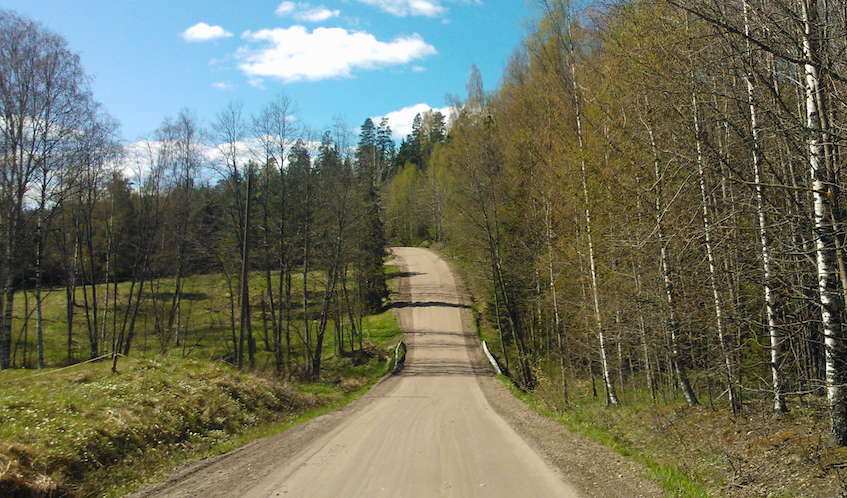
Footprint_photo

Modified version of the original post on ‘The Illusion of Work’ Blog.

We all go through many changes in life, both positive ones and those that are tough and challenging. None of us look forward to disruption in our lives.However, sometimes, we don’t seem to have much control of what life brings to our doorsteps. As much as we prepare to face difficulties, it takes a lot of energy and effort.

What are some basic, helpful steps when the world around seems to be chaotic, with things running out of control?

1. Taking The Time To Reflect and Be Grounded

When the whole world around seems to be rocky, one needs to find ways to feel grounded by finding moments of peace, silence and calmness. Consciously taking the time to reflect (individually or with a trusted connection), understanding the big picture, avoiding unrealistic panic from taking over by putting things into context/perspective, remembering what is really important to oneself in the overall scheme of things, acknowledging good aspects of life, and focusing on things that one has control over are some ways to progress meaningfully. It’s worthwhile to breathe deep, take a step back, and spend some time to think about our overall direction and focus.

2. Finding One’s ‘Secure Bases’

The term “secure base” comes from the post-war attachment theory research of John Bowlby and Mary Ainsworth. According to this theory, all humans have an innate desire to seek closeness to and comfort from a person who gives them a sense of protection. This becomes especially relevant during tough and challenging times. George Kohlrieser and team defined “secure base” as ‘a person, place, goal or object that provides a sense of protection, safety and caring and offers a source of inspiration and energy for daring, exploration, risk taking and seeking challenge.’ In tough times, secure bases can come in the form of close friends, relatives, colleagues, teachers, coaches or leaders. They could also play an important role in providing a ‘safe zone’ to explore new paths and build momentum towards positive actions and outcomes.

3. Maintaining Physical & Mental fitness

Research suggests that staying physically active leads to better physical and mental states. According to John J Ratey, MD, an Associate Clinical Professor of Psychiatry at Harvard Medical School, adding exercise to your lifestyle sparks your brain function to improve learning on three levels. First, it optimizes your mind-set to improve alertness, attention, mood, and motivation. Second, it prepares and encourages nerve cells to bind to one another, which is the cellular basis for logging in new information. Third, it spurs the development of new nerve cells. Building exercise routines with a peer group or acquaintances increases the probability of consistency. When feeling low, getting fresh air into our system or spending time in nature can be refreshing.

Studies on meditation find that if practiced consistently, it has a huge impact on overall individual wellbeing, recovery and happiness. The practice of mindfulness meditation by trying to simply focus on own breath (non-judgmental observation) is a highly effective way to counter the panic and stress button in my brain from taking over. Tony Schwartz recommends in his HBR article (Manage Your Energy, Not Your Time) that deep abdominal breathing is helpful in defusing negative emotions. Exhaling slowly for five or six seconds induces relaxation and recovery, and turns off the fight-or-flight response. Dr. David Rock indicates in his book, ‘Your Brain at Work’ that a person’s capacity to use his or her brain effectively can be impaired under conditions of peak stress or anxiety. Our self-awareness muscle can be developed in everyday life by paying attention to the relationship between how we feel and what we do. Calming ourselves down or quieting the mind will help us to be highly effective.

4. Focus, Inspiration and Humor

Neuroscience studies support the notion that our focus is fundamental – focusing on inspiring, positive thoughts have a higher probability of spurring us towards action. Once ideas and insights flow out from our thinking, we have to follow it up with small, practical actions quickly. A general feeling of expecting good things generates a healthy level of dopamine and may be the neurochemical marker of feeling happy. When the going gets tough, even small moments of inspiration and humor can go a long way. Inspiration can come in different forms. It is important to keep an open mind and proactively seek them out as well – in the form of stories, books, movies, pets, real life role models and experiences. Humor tends to defuse stress and we immediately feel a bit lighter. It is also contagious. An important related choice is in considering with whom or where we spend our time. The book, ‘How Full Is Your Bucket’ states that 9 out of 10 people say they are more productive when they’re around positive people.

As we all know, no two human beings are the same. The effectiveness of change practices, how we cope with stress, and related solutions vary with preferences, individual personalities and environments. It is also important to recognize and act quickly when we ourselves or someone around needs professional support. This could unfortunately be an extremely difficult step in many places due to the fear of social stigma and negative attitudes in society. Understanding and compassion are critical.

What has helped you to personally navigate through challenging scenarios?

Wishing you the very best in your journey…

“Your joy is divine, and so is your suffering. There’s so much to be learned from both.” – Dr. Wayne Dyer

References

  1. Secure Bases
    http://www.tlnt.com/2012/10/23/secure-base-leadership-what-it-means-and-why-it-really-matters/
  2. Your Brain At Work (Book) by Dr. David Rock
  3. NeuroLeadership Institute Website –http://www.neuroleadership.org/index.shtml
  4. Manage Your Energy, Not Your Time by Tony Schwartz and Catherine McCarthy, Harvard Business Review Article
    http://hbr.org/2007/10/manage-your-energy-not-your-time/ar/1
  5. Exercise and the Brain
    http://www.sparkinglife.org/
  6. Mindfulness with Jon Kabat-Zinn (Video of a session on Mindfulness at Google) And Multiple Books Published http://www.youtube.com/watch?v=3nwwKbM_vJc
  7. How Full Is Your Bucket? (Book) by Tom Rath and Donald Clifton


Evolving Self – Transitioning Back

“Life is a series of natural and spontaneous changes. Don’t resist them; that only creates sorrow. Let reality be reality. Let things flow naturally forward….” – Lao Tzu

As I was saying good byes to friends and ex-colleagues in Finland earlier this year, many encouraged me to write about my experiences of transitioning back to India, after more than a decade of living in the U.S. and Finland.  In addition to personal experiences, some were also curious to hear more about India through the eyes of someone they could relate to.

For other readers, in a personal development context, may I suggest the self awareness question for your thinking – “What defines you?”

Considering that Finland and India are worlds apart in many respects, this transition involved big readjustments.

The early stages of moving back involved feelings of fuzziness.  It was a feeling of being in different places at the same time.  There was a mix of sadness and happiness, thinking about what would be missed and gained.  It involved letting go of personal comfort zones, habits and relationships built over the years.

There were early readjustments.  After having gotten used to the silent environment in Helsinki, even adjusting to the general noise levels was a change.  I live in a smaller city in the south of India (Trivandrum, Kerala) which is more laid back and easier to navigate compared to many other larger cities.  Life brought a difficult turning point, when my mother passed away after a month of my arrival.  Pain and challenges tend to lead to a yearning for spiritual advancement.  My efforts during previous years to understand spirituality deeper helped to focus on life from a larger wisdom and perspective.

I’ve wondered – Does wisdom find you or do you find wisdom?  What leads you or vice versa to you, certain things, people or circumstances that seem to be outside the predictable flow of things in life?

On the professional side, I had decided to move in an independent path of consulting and coaching.  This involved figuring out new ways of working.  Working from home on my own was an interesting adjustment process.  Trying to build connections in a place that I had not spend much time during the past decade was another.  In many ways, it felt like starting from scratch.  There was a sense of frustration and impatience creeping in and a need to manage that.  I traveled to Delhi and Chennai to meet with contacts and attend a national HR conference.  Those experiences were helpful to get a wider view on some cultural and professional aspects.  Some ex colleagues and friends were gracious in meeting and responding.  There were disappointments in my mind with few others – I realized it was due to my own expectations mostly of others without thinking about or knowing their perspective.  Life seems to become a lot easier and less complicated when we let go of judgment and expectation of wanting others and things to be our way.  Learning to deal with that was important personal progress.

It also gave me an impetus to write more and channel positive energy.  A high school friend who is currently working on a book and involved with the publishing world, helped create new blog page.  In around three months, there have been close to1000 unique views from 45 countries.  I am grateful for the many encouraging responses and feedback.

On the personal exercise front, after enjoying squash (learning to lose painfully 🙂 a lot before starting to win) for the last four years personally, I am yet to pick up a new game and get back to the active exercise mode.  Squash courts are hard to find.  Some of that relates to me trying to find my new enjoyable zone.

Regarding general experiences in India:

The process flows and government interfaces are improving slowly and surely for citizens.  Another positive aspect I experienced personally is meeting more grounded individuals in positions of power in the public and private spaces, who are aware of the intelligent use of power and want to make a positive change and impact.  Experiences in India can vary considerably depending on where one is located.

Readjustments also involved getting used to how things work.  Many things (public or private sector) did not seem to work smoothly and to the expected or communicated timeframes.  It also seemed to take multiple follow-ups until something got unnecessarily complicated.  Time still seems to be a flexible concept and delays are normal.  Communication styles are still mostly top down and hierarchical and the frontline staff in most places are not empowered to make changes for customers.  Small business owners say that they still can’t trust work to get done if they’re not micromanaging their staff.  Many things get completed faster depending on where, who and how the request comes.  Social status and networks plays a major role.

India continues to develop.  Infrastructure is much better but there is a long way to go before getting to world class.  The progress may be in bits and pieces.  It is encouraging to see the new central government emphasize major infrastructure development and change in attitudes and habits.  Connectivity, accessibility and ease of travel are much better.  The impact of information technology is widespread, with many process being connected to the internet.  Unlimited internet at home is not unlimited at the same speed – the access speeds reduce dramatically after a certain data transfer amount depending on the type of connection packages you take.  The cars on the roads have changed and the numbers have increased dramatically with most global car brands being present but the quality of many roads and traffic management need attention.  Maintaining the current roads without potholes seem to be a challenge.  One of my rough first hand experiences was a six hour journey in the last row of a state transport bus, which felt like sitting on a jumping ball.  There seems to be lesser queue disruption than in the past.  Public transport system is overcrowded during peak hours but provides much more options and comfort than earlier.  Mass transport systems are still few in number.  Basic utilities like energy and drinking water seem to be under stress and require a lot more planning for the future.

Some services are as good or better than anywhere in the world.  I can order a cab sitting at home, for any time of the day or night.  There are also apps now in many parts of India that even track our ordered taxi through gps, after we order.  The Delhi metro seemed as good as any other metro system in the world but the rush hour traffic may become or already is over capacity.  Global startup names like Uber seem to be building up in India quickly.  I can also book bus, train or plane tickets seamlessly using apps or through the internet anytime – this was not easy even few years back.  I could travel on the train by just showing my photo id and online ticket booking.  Most major brand names are visible on the local store shelves and everywhere .  The latest mobile devices and electronic equipments are quite visible.

Even though many things have improved tremendously, it is obvious that India is still difficult for foreigners or tourists to navigate practically on their own.

Back to my own experiences – Memories, recollections and emotions still remind me about my previous world, people and experiences.  There are still days in which I distinctly picture internally my favorite walking path around the waterfront in Helsinki.  What I miss most is my diverse conversations with my small group of friends and connections.  Physical distance results in mental distances and grabbing a coffee together is no longer an easy option.  As time passes, the distance grows.  Close friends will remain close and the reconnection will be seamless but the nature of closeness shifts when the frequency of interactions drop.  On the other side, old friends in India are still friends, but they have evolved as well and we are all in different phases.  That needs rebuilding.  Very few stay the same.

All this serves as means to deeper learning, wisdom, new paths, connections and a more evolved future.  I am learning and unlearning without letting go of the valuable knowledge and wisdom acquired.  With every new direction, life has led to unexpected new paths, people and experiences.

Feeling lost seems to be a familiar feeling before discovering myself in an evolving self.  It has led me to a place of hope, belief and confidence to progress through new experiences stronger.

To my global friends, I hope and wish our paths cross again… There is some sadness in thinking that it may not happen sometimes but glad that destiny helped cross our paths.  It may not have been total coincidence.  I am a result of my experiences.

A special ‘Thank You’ to my good friends for your inspiration and encouragement, to share my experiences.

“We are travelers on a cosmic journey, stardust, swirling and dancing in the eddies and whirlpools of infinity.  Life is eternal.  We have stopped for a moment to encounter each other, to meet, to love, to share.  This is a precious moment.  It is a little parenthesis in eternity.”- Paulo Coelho, The Alchemist


Feeling Stuck In The “Middle”? Life In Middle Management…

Middle managers are a very interesting group for study in any organization.  From various conversations and experiences, I’ve observed multiple challenges and frustrations faced by this group.  They seem to hold a lot of power, influence and operational responsibility in the organization but there are frustrations from different directions.

Many experts in recent years have called for a radical rethink of how organizations are structured, doing away with traditional corporate hierarchies and suggest that middle management is not helping and holding organizations back.  Some have even advocated doing away with middle management.  During many reorganizations or restructuring programs in organizations, ‘delayering’ the organization is one of the top principles adopted.

There have been discussions on “Is It Time To Abolish Middle Management?”, “Are Middle Managers Becoming Obsolete?”, and “The End of Middle Managers”.  In India, there have been concerns about creation of a mid-level that don’t possess the required competencies because of lack of experience, improper skill-building and almost negligible grooming by seniors.  A 2014 report by the Australian Institute of Management indicated that middle managers are underperforming and organizations have promoted technical specialists to middle management ranks without investing sufficiently in developing the leadership and management skills.  An Accenture post earlier this year stated that If IT has displaced middle managers in the information flow, digital obliterates the hierarchy they call home.  According to them, there is a silent crisis in most organizations – too many administrators and not enough real managers.  In short, middle managers are in the limelight and their activities and value to organizations are under the microscope.

A 2010 Boston Consulting Group & World Federation of People Management Associations paper reported that middle managers are critical to improving overall employee engagement and corporate performance.  They act as a bridge between top managers and team members.  Though they see the vision at the top of the organization and the pain at the bottom, they frequently do not have the support of senior management or effective levers to do their jobs and provide assistance to their employees.

Who are middle managers?
A logical way of defining middle managers is to identify the group between senior and front-line managers in the organisational hierarchy.  Middleness can have several dimensions: middle of a command hierarchy; middle in terms of time-scale and scope of decision between strategic and routine supervision; middle in terms of organizational impact.

How could we address some of these issues, at the individual and organizational level?

At the organizational level:

The BCG/WFPM study advocated:

  •  Delayering the organization and creating larger exciting roles for middle managers, in order to remove the barriers that frustrate them and encourage initiative.
  • Empowering managers to act by giving them levers and authority to succeed, but making sure they understand what is required of them.
  • Accelerating leadership skill development.

Managing time and priorities are normally the most difficult aspects for this group.  As a result of round the clock operational and team responsibilities, they find very little time for their own development which holds valuable impact for their stakeholders.

Becoming a middle manager often involves a significant shift in mindset from personal achievement to gauging success based on the accomplishments of a team (Refer recent post on “Transitions“).  Experts have suggested that the biggest leadership training impact may come from blending experiential on-the-job learning, coaching and feedback with formal classroom training.  This group could benefit a lot from coaching and mentoring – due to the thinking space that is normally hard to come by due to constant operational pressures, multiple topics that they may feel insecure or uncertain to discuss with their leaders and high stress in juggling multiple responsibilities professionally and personally.  The need for active dialogue, support and empowerment from senior leadership is high.  Senior leaders can also help build clarity in expectations.  HR teams can also play a key role in facilitating development and communication channels.

Mastering the art and science of managing talent needs to include a combination of multiple structured learning/development modes and cycles.  One may say this is not rocket science.  I heard a rocket scientist remark recently that rocket science was easier compared to managing people.  It is extremely important to not underestimate this aspect.

At the individual level:

If you’re a middle manager, you have to take the responsibility for your own development and success.

In between all these discussions of streamlining, restructuring and even doing away with middle managers, it is quite obvious that middle managers hold the potential to add a lot of value to organizations.  Even Google found with the help of analytics that middle managers do matter.

What could be some development targets, irrespective of the organization or technical nature of one’s role?

It is advisable to start working on developing one’s own leadership skills, mindset and behaviors in the early stages, utilizing multiple avenues.  The earlier one can build self awareness and emotional intelligence capabilities, the better.  The journey to leadership maturity has to start early (Check out References- video of Dr. Dave Ulrich defining the Leadership Code).  Getting selected to a leadership position would be excellent but an unprepared and immature leader can create a lot of damage to his or her reputation, an organization, careers and lives of many capable individuals.

The BCG/WFPM paper states that middle managers must be effective communicators, implementors and trust builders.  They will focus on outcomes, not overmanaging.  Middle managers need to be able to understand the corporate vision and strategy.  They must know how to develop and motivate their staff.  Related skills that seem to stand out are communication skills, ability to build trust, credibility, empowerment, execution/implementation, high performing teams and organizations.

Lynn Isabella, an associate professor at the University of Virginia Darden School of Business writes that the role of translator is a new leadership paradigm for middle managers. Being a translator means being an interpreter.  A huge advantage of being a middle manager is access to those in the organizational trenches.  They need to speak the language of top management as well as that of others lower down in the company. They need to understand strategic thinking and the language of finance, accounting, marketing, operations and human resources.

Periodic conversations with individuals from various backgrounds and different stakeholders will help a lot.  How many middle managers do we normally see so busy and caught up with their work, that they have no time for any conversation outside their own delivery? Building a diverse network could also result in a healthy support group.

According to Accenture, a middle manager of the future will know how the company wins at a conceptual and customer level. Making money is one thing, knowing how and why you make money gives you the ability to make even more. There will be recognition regarding the difference between critical and commodity capabilities.

Prioritizing and right judgment/decision making become very important skills to develop.  Middle managers play an important role in developing future talent, leadership and in determining the quality of the work environment through their behaviors and practices.  How would you want to feel during most of your time awake in life – at work with your colleagues or stakeholders?

It may also be a time in the career when comfort zones may look very attractive and there is a reluctance to take on risks or different assignments.  In today’s changing world, if you are not taking on challenges of different nature and complexity levels, the risk of becoming a ‘sitting duck’ for future reorganization/restructuring efforts is high.  Worse still, would be to look back and think where or how my uneventful last ten years of life went?

The writing on the wall seems to be clear.  There will be fewer middle managers in the future and they will have more challenging requirements, competencies and responsibilities.  Some organizations may experiment successfully with none, which may depend on factors like size, scope, type of work, industry etc.

Hopefully, reading this will trigger ideas on focus areas for your development as a middle manager.

I wish you meaningful growth and success.

References:

  • The contingent role of management and leadership development for middle managers, Patrick McGurk, London School of Economics – http://etheses.lse.ac.uk/277/1/McGurk_The%20contingent%20role%20of%20.pdf
  • Is It Time To Abolish Middle Management? – http://www.psychologytoday.com/blog/wired-success/201403/is-it-time-abolish-middle-management
  • Are Middle Managers Becoming Obsolete? – http://business.financialpost.com/2014/03/09/are-middle-managers-becoming-obsolete/?__federated=1
  • The End of Middle Managers – http://www.forbes.com/sites/davidkwilliams/2012/07/10/the-end-of-middle-managers-and-why-theyll-never-be-missed/
  • How the middle management became India Inc’s biggest headache…. – http://articles.economictimes.indiatimes.com/2013-04-12/news/38464091_1_ms-unnikrishnan-skill-gap-india-inc
  • Middle Managers – Evaluating Australia’s Biggest Management Resource – http://www.aim.com.au/sites/default/files/AIM_MiddleManagementSurveyReport.pdf
  • Creating A New Deal For Middle Managers – BCG/WFPMA – http://www.bcgindia.com/documents/file52425.pdf
  • Redefining middle management in a digital world – http://www.accenture.com/us-en/blogs/digital-business/archive/2014/02/11/redefining-middle-management-digital-world.aspx
  • 5 Ways To Save Your Middle Managers From Burnout – http://www.fastcompany.com/3028674/leadership-now/5-ways-to-save-your-middle-managers-from-burnout
  • The Happiness Machine – How Google Became Such A Great Place To Work – http://www.slate.com/articles/technology/technology/2013/01/google_people_operations_the_secrets_of_the_world_s_most_scientific_human.single.html
  • Video – Dave Ulrich – Defining the Leadership Code – https://www.youtube.com/watch?v=FC6p9yXdOjE
  • For Middle Managers, The Power Is In Translation – http://www.washingtonpost.com/business/capitalbusiness/for-middle-managers-the-power-is-in-translation/2014/01/10/53bde1b6-610b-11e3-bf45-61f69f54fc5f_story.html


How Much of You Is Your Job Title or Position? Importance of Humility & Wisdom

To my dear friends, colleagues and readers,

Here are some questions for you:

If you were to lose your important position, title or social status today,

  1. What would happen to you?
  2. How would you feel, behave?
  3. How would your existing relationships shift? How would they respond?

Many people in today’s world seem to lose touch with their authentic selves once they get used to the trappings of an important corporate job, title and perceived power. Humility goes down. Arrogance creeps in. Ego grows rapidly. Respect factor goes down. A feeling of invincibility kicks in.

One starts believing or over relying on one’s belief, status of positions and unconsciously start feeling that these will last forever.

Why does one need to reflect and be aware of the line between confidence and over confidence/arrogance?

Like most things in life, nothing lasts forever.  Life involves ups and downs, successes and challenges, pleasures and pains. Sometimes, unexpected shifts in one’s life can cause lots of pain, be humbling and bring one to reality that we are  all in fact mortal. They may come forth in the form of unexpected job challenges, health issues with self or loved ones, losing someone close, personal issues etc.

If most of your relationships are formed and defined around your perceived social status and not your authentic selves, it may be helpful to be prepared for surprises and pains when life starts to present difficult moments.

It is helpful to be in touch with one’s own authentic self and values.  When the rough times appear, this prepares one more to maneuver through, similar to an anchor that holds a ship stable in rough waters. In today’s socially networked world, corporate or social hierarchy does not necessarily indicate level of influence or impact. Therefore, it’s helpful to be aware of arrogant behavior and where that may or may not lead one to.

Letting go of the trappings even for a bit can be a refreshing experience and reality check for oneself and the world of relationships.

I think most of us go through similar scenarios as we progress in our careers and lives.  What is important is to build awareness, consciousness, learning and wisdom. This will help to navigate rough waters whenever they come next.

According to Professor Ursula Staudinger, a life span psychologist and professor at Columbia University, true personal wisdom involves five elements. They are self-insight; the ability to demonstrate personal growth; self-awareness in terms of your historical era and your family history; understanding that priorities and values, including your own, are not absolute; and an awareness of life’s ambiguities.

Wishing you humility, wisdom and true success in your journey.

Additional Suggested Reading: Top 5 Regrets of the Dying

Few Notes of Wisdom for Reflection from ‘How Will You Measure Your Life?’ (Book by Clayton M. Christensen, James Allworth, Karen Dillon)

  • Solving the challenges in your life requires a deep understanding of what causes what to happen.
  • “The only way to be truly satisfied is to do what you believe is great work.  And the only way to do great work is to love what you do.  If you haven’t found it yet, keep looking.  Don’t settle.  As with all matters of the heart, you’ll know when you find it.” – Steve Jobs
  • Too many of us who start down the path of compromise will never make it back.
  • What’s most important to you in your career?
  • Problem is that what we think matters most in our jobs often doesn’t align with what will really make us happy.
  • Good intentions are not enough…spend your resources consistent with your intentions.
  • The opposite of job dissatisfaction isn’t job satisfaction, but rather an absence of job dissatisfaction.

Changing Jobs?

Almost everyone you speak with nowadays mentions some major change and related initiative happening within the industry or organisation.

Individuals are moving through different jobs with increasing frequency. The median number of years that wage and salary workers had been with their current employer in the U.S. was 4.1 years in January 2008.(1)

It therefore becomes critical that an individual understands the key elements for quick and effective transition across jobs and organisations, and develops the ability to learn and unlearn in shorter cycles.

Studies have repeatedly shown that the ability to learn from experience is what differentiates successful executives from unsuccessful ones. Successful executives have strong and active learning patterns from key job assignments. They learn faster, not because they are more intelligent, but because they have more effective learning skills and strategies.(2)

Peter Drucker wrote, “Knowledge becomes obsolete incredibly fast.”

Almost all jobs have the following core learning components that are critical for effective delivery. I believe that strong awareness and mastery over these elements provide us with the agility to transition and succeed across jobs and organisations quickly.

* SUBJECT MATTER/BODY OF KNOWLEDGE
Every job involves some specific and core subject matter areas. These could most effectively be acquired and applied through a combination of on-the-job experiences and academic learnings.

* PROCESSES
Every organisation has a set of processes for most functional areas. Most of the work nowadays is defined through process flows. Building a good understanding of the organisational process flows allow us to determine what we need to do and how it impacts stakeholders.

* TOOLS/TECHNOLOGY
All organisations and jobs have specific tools and technologies that support work. Having a good understanding of how they work and are applied could substantially increase overall efficiency.

* PERSONAL NETWORKS
In my opinion, this is one of the most important elements. It includes both internal and external networks of personal relationships that allows us to function with a high degree of effectiveness. In many instances, the personal networks are critical for achieving the ‘extra mile’ of success and to managing crises. In most instances, people go beyond the specified requirements of a process if there is a strong existing relationship with the specific individual. These relationships are also critical links to tacit knowledge that’re often unavailable on formal knowledge management systems or databases. Treating people with respect and empathy normally will get you valuable help and inputs on the organisational culture, especially during the tough transition phase. It also helps us to build our network quicker.

* USING EXPERIENCE/WISDOM
This is gained through the application of knowledge in a variety of situations and learning/adjusting from successes and failures (what has worked/not worked?) over time. This is very relevant and important for managers and leaders as a lot of judgment is involved in making important decisions. Many of those decisions would not have defined or single answers.

Understanding and focusing on the core elements of work transitions have a big impact on our effectiveness.

The elements mentioned above clearly relate to the concept of ‘Learning Agility’ (Eichinger & Lombardo), measured through four key facets: (a) Mental Agility (b) People Agility (c) Change Agility and (d) Results Agility.(3)

Please share your experiences and observations. This is a very useful and relevant topic for many individuals.

References:
(1) Bureau of Labor Statistics, Friday, September 26, 2008, EMPLOYEE TENURE IN 2008

(2)(3) The Korn/Ferry Insititute: Using Learning Agility to Identify High Potentials around the World by Kenneth P. De Meuse, Guangrong Dai, George S. Hallenbeck, King Yii Tang

Rethinking Work In A Flat World (from “The World is Flat”)

I recently finished reading “The World Is Flat” and found the following thoughts from Tom Friedman to be extremely interesting.

* The key to thriving, as an individual, in a flat world is figuring out how to make yourself an “untouchable”. “Untouchables” are people whose jobs cannot be outsourced, digitized, or automated.

Couple of key categories that untouchables in a flat world will fall into:
a. People who are really “special or specialized”.
b. People who are really “localized” and “anchored” (jobs must be done in a specific location either because they involve some specific local knowledge or because they require face-to-face, personalized contact or interaction with a customer).

* Key Roles in a Flat World
1. Great Collaborators and Orchestrators – Collaborating with others or orchestrating collaboration within and between companies.
2. Great Synthesizers – Creating value by synthesizing disparate parts together.
3. Great Explainers – Seeing the complexity but explaining it with simplicity.
4. Great Leveragers – Leveraging technology, designing programs that enable others to work smarter and faster.
5. Great Adapters – Applying depth of skill to a progressively widening scope of situations and experiences, gaining new competencies, building relationships, and assuming new roles. Capable of not only constantly adapting but also of constantly learning & growing.
6. Passionate Personalizers – Giving personal, special touch and real passion to a normal task.

The most important ability you can develop in a flat world is the ability to “learn how to learn” – to constantly absorb, and teach yourself, new ways of doing old things or new ways of doing new things.

Why Is The Knowledge Landscape Changing Quickly

The internet has changed the world completely.

Access to information and knowledge in any part of the world today provide great opportunities for anyone with the curiosity, interest and drive to learn. It also enables the mutually beneficial exchange of knowledge among all levels of the ‘knowledge society’.

‘Knowledge power’ is not the special privilege for a select few anymore.

Individuals and organizations would have to be very careful not to be arrogant about their past successes, about what they know or where they are currently. Openness to ideas and feedback from individuals or groups from any part of the world could be highly critical to success in the internet world.

This also means higher levels of transperency. Insensitivity to or negative feedback from the customers, markets or communities can quickly be communicated and shared across the world.

More Questions than Answers

My first post relates to my quest to find specific answers for many questions on business management practices and responses from different individuals, in academia and business. I wanted to find one best answer to different questions that could be applied across multiple environments.

I’m learning that though there are multiple possibilities, the key to succeed is to figure out the unique factors and what’s most relevant to a particular environment.

There seems to be no one best tailor-made solution or answer for a problem in the world of management. Different variables influence the approach and solution. Some approaches that work really well in one environment might produce undesired results in another. The future world of management and consulting could hold far more interesting challenges, considering the speed of change and global access to information in today’s world.

So, how might one navigate through the complex business world?
Being sensitive to the environment and the ability to discern by asking more questions could hold the key.

Newer posts

© 2026 Lead-Wise

Theme by Anders NorenUp ↑