
PURPOSE & IMPACT

Author: Tojo Eapen (page 2 of 16)

Human Qualities Most Likely to Matter In Work With AI

Image generated with Chatgpt

There are lots of discussions and debates nowadays regarding the evolution of work with growing AI impact.

Noticed a very interesting article, “Is AI Smarter Than People? It’s complicated”, in the Wall Street Journal (source below). It also highlights inputs from a related experiment, and the human qualities most likely to matter in the evolving world of work.

These are selected notes from the article.
———-
* My research suggests that we’ve been asking the wrong question and drawing the wrong conclusions.
* In an experiment relating to prediction market accuracy, the hybrid teams (human-AI) reached insightful conclusions that neither a human nor a machine could have produced on its own.

* It’s not that these people were more intelligent than others in the study. They demonstrated two important qualities: perspective-taking and intellectual humility.
Perspective taking – ability to genuinely inhabit another point of view.
Intellectual humility – ability to recognize the edge of your own knowledge and sit with that discomfort rather than trying to rush to fill it.
* Perspective-taking requires requires genuine curiosity about minds other than your own. Intellectual humility requires a kind of emotional courage: the willingness to feel uncertain, even a little foolish, in the presence of something or someone that seems very sure of itself.

* These are not the soft skills we typically celebrate.
* What my experiment suggests is that the human qualities mostly likely to matter are the uncomfortable ones: the capacity to be wrong in public and stay curious; to sit with a question…to read a confident, fluent response from an AI and ask yourself, “What’s missing?”…to disagree with something that sounds authoritative and to trust your instinct enough to follow it.
* We don’t build these capacities by avoiding discomfort. We build them, by choosing it, repeatedly, in small ways.
* Most AI chatbots today default to easy answers which is hurting our ability to think critically.
*…the divergence I worry about – the quieter process of people gradually outsourcing the judgment…
* What can any of us actually do about it? Start with the reframe: The goal of working with AI isn’t to get the answer faster. It’s to find what you are missing…use AI as a savant collaborator to explore uncertainty.
* Perspective-taking, intellectual humility and curiosity are traits that can be cultivated.
———-

Source: Is AI Smarter Than People? It’s complicated; Vivienne Ming (neuroscientist, cognitive scientist and author of “Robot-Proof…”); April 25-26, 2026
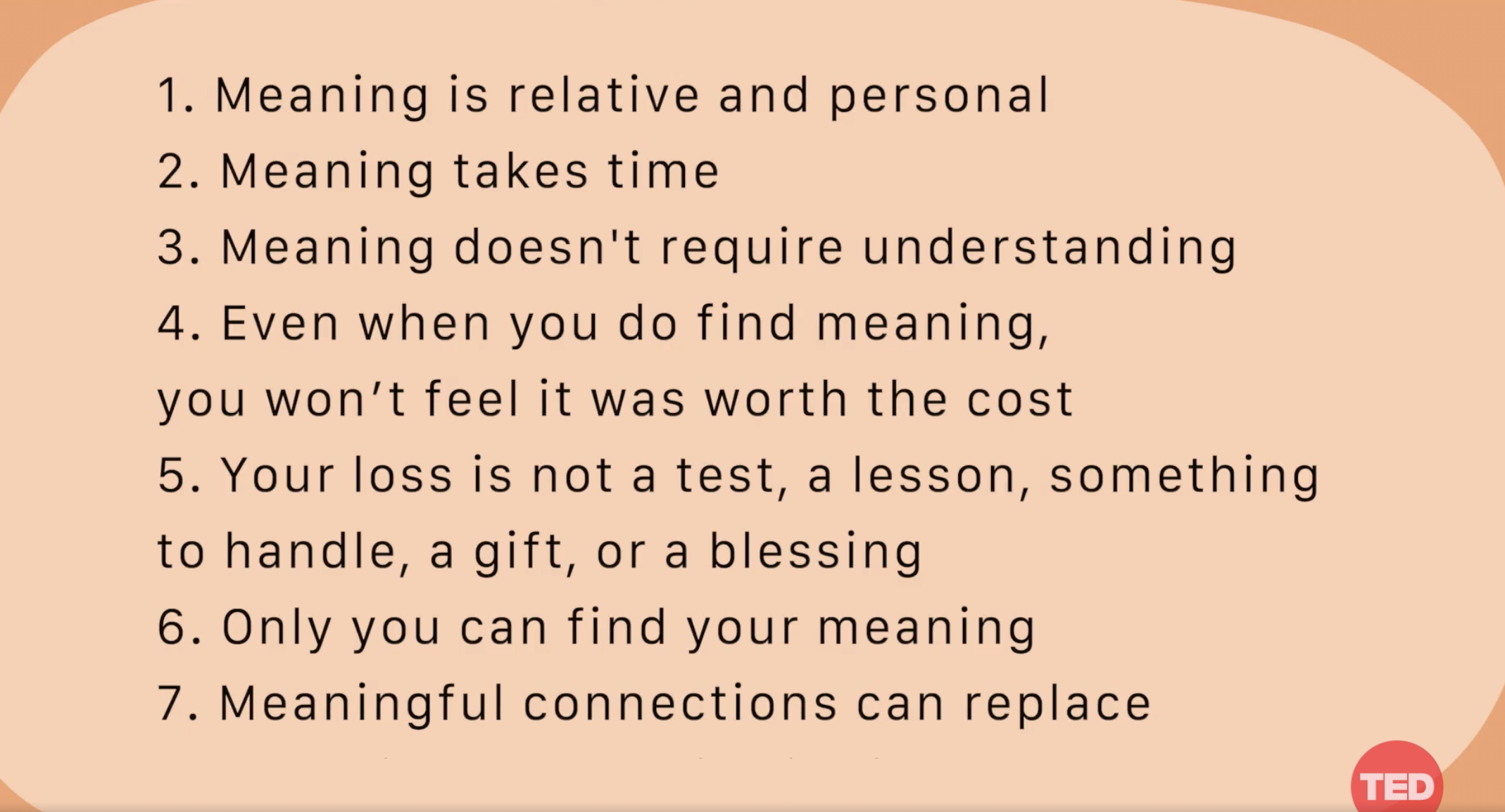

Finding Meaning After Loss

Many people face loss and experience grief in different ways. They move through related feelings and often feel lost. A loss can come in different ways.

Awareness of this topic and how to work through it can help a lot, even to being present for someone going through a loss.
We have heard about the five stages of grief – denial, anger, bargaining, depression and acceptance. 

This is a video, discussion with grief expert, David Kessler that gives valuable awareness and context on the topic. David was a co-author with Elizabeth Kubler Ross (famous for her work on five stages of grief) on the book, On Grief And Grieving. He highlights a sixth stage that is very important – finding meaning.

According to David, there are seven factors that guide the concept of meaning. This is helpful to understand (from the video).

Importance of understanding Commitment from your team members

Image generated using Chatgpt

I remember reading this behaviour improvement for leaders in Marshall Goldmsith’s book, “What Got You Here Won’t Get You There”, and have experienced and observed this play out in most organizational/leadership settings in multiple geographies. This is a really important leadership behaviour that has high linkage to team member engagement and commitment.

Marshall posted the following notes recently on LinkdedIn:

“A classic challenge for smart, successful leaders – especially leaders with technical backgrounds (like engineers) – is ‘adding too much value’.

What does this mean?

Imagine that I report to you.  I am young, smart and enthusiastic.  I come to you with an idea.  You think it is a great idea.  Rather than just saying, “great idea” our natural tendency is to say, “Why don’t you add this to it?”

Here is the problem.  Although your ‘added value’ may make the quality of the idea 5% better.  It may decrease my commitment to make it work by 50%.
Your direct report may be feeling, “It is no longer MY idea boss. Now it is YOUR idea.”

David Ulrich, taught me that, “Effectiveness of execution is a function of A. the quality of the idea – times – B. my commitment to make it work.

As a leader, before ‘adding value’, think, “Will my comment increase the commitment of the person I am talk to right now?”

If the answer is, “no”. Then ask yourself, “Is it worth it?”

Sometimes it is. Often it is not.

These few seconds of reflection can go a long way in helping you build commitment, and ultimately empower, the members of your team. ”

Improving this impactful behaviour as a leader takes awareness, reflection, and continued practice. Effectiveness of execution anywhere does look to be a function of the quality of the idea and the commitment to make it work. It would serve you well as a leader and manager to remember this.

Performance Appraisals And Career Management

Noticed a great article related to career management and performance appraisals in the Mint newspaper today (April 13, 2026) – “What Your Appraisal Cannot Tell You About Your Career” by Vineet Nayar, former CEO of HCL Technologies. Such posts hold increasingly valuable food for reflection in the fast evolving world of work.

Selected notes from the article:

* Layoffs, cautious hiring and rapid shifts driven by technology have made careers less predictable than before.
* What exactly is an appraisal measuring?
At best, it is a snapshot of performance at a point in time, shaped by business priorities and managerial judgment. At worst, it captures activity but misses what really matters. Yet, careers are often judged through this narrow lens.
* Careers rarely stall because of one bad rating. They stall when we treat that rating as a verdict instead of what it really is: a signal.

* Clarity comes from three simple questions:
1. Purpose – Why are you doing what you are doing?
(There is no right answer but there must be a honest one.)
2. Choice – Why this role, this organisation, this path?
(Layoffs have shown that staying put is not always safe. Questioning your choices is uncomfortable but necessary. The difference between a chosen path and a carried path is the difference between ownership and drift.)
3. Driver – Why are you, specifically doing this?
(In a market where many people have similar skills, the real question is not whether you are good at your job. It is whether you stand out. Is your effort driven by a genuine desire to build something meaningful?)

* The real risk today is not a poor rating. It is letting that rating decide your direction.
* Your career is not defined by a number on a form. It is defined by the answers you are avoiding.

The three questions are worth spending time on and building clarity.

Data On Higher Education Institutions In India And Employability

These are some interesting notes from a Business Standard article today related to higher education in India (based on a report, titled “From Degree Factories to Employability Hubs”, released on Monday by TeamLease EdTech). In future, would there be increased emphasis on placement and career outcomes?

* Fewer than 20% of higher education institutions in India manage to place more than 75% of their students within 6 months of graduation.
* 31.6% placed between 51% and 75% of students.
* Nearly 29% of institutions reported placement rates below 25%, underscoring wide disparities in employment outcomes across institutions.

* The report highlights persistent gaps between academic outcomes and labour market expectations, even as universities and colleges increasingly prioritise job readiness.
* Higher education institutions must move beyond traditional classroom-based models, and integrate practical exposure, internships and industry linked training into academic programs.
* 86% of institutions say their curricula are fully aligned with industry requirements across all programmes.
* Roughly a quarter of institutions show some degree of industry alignment, suggesting that efforts to connect academic programmes with labour market needs remain limited and uneven.
* Industry collaboration is expected to play a critical role in improving employability outcomes.
* The report suggest that institutions may increasingly be judged not just on enrolment and academic performance, but also on placement outcomes and long-term career progression of graduates.

Source: Fewer than 20% colleges achieve strong placements: Report; Business Standard; Auhona Mukherjee, March 23, 2026

Does Kindness Have A Place in Business?

Noticed refreshingly different perspectives from Mayank Rautela, Group CHRO at Apollo Hospitals – regarding how kindness is not just a “soft skill” but a business imperative and how it can be strategically embedded into leadership. There are some valuable notes for reflection, especially for healthcare leaders everywhere and the interview (referenced below) is worth reading.

Selected notes from the interview with ETHRWorld:
* Genuine human connection is profoundly contagious. It transforms a transactional environment into a compassionate one, inspiring others to pay it forward and shaping a culture where compassion is the norm, not the exception.
* Kindness is a strategic driver of performance. It’s the foundation of psychological safety…We’ve consistently observed that teams that practice kindness most also have the highest engagement, lowest attrition and better clinical outcomes. Research validates this link: empathy in care leads to greater patient loyalty and trust.
* For a leader, kindness is a core competency, not a soft trait. It’s about leading with authentic empathy and vulnerability.
* We are conditioned to prioritise efficiency over empathy, and many feel they simply don’t have the time to be kind. The real issue isn’t a lack of desire, but fear that kindness may be seen as weakness.
* Kindness must be an institutional commitment, not an accident…also lives in the way we celebrate our people.
* We balance performance with empathy by making kindness integral to our HR strategy.
* Kindness endures when it is deeply woven into the fabric of an organisation’s DNA – through its values, everyday behaviors, recognition systems, and leadership practices…cannot be a one time initiative, must be a way of life.

Source:
Kindness isn’t soft — it is strategy: Apollo Hospitals’ Mayank Rautela on reshaping workplace culture; ETHRWorld; October 1, 2025.

U.S. Visa Shifts and International Student Flows

One area interesting to watch in relation to the U.S. visa changes, would be the international student flow towards the U.S., and potential financial impact (especially on the universities). Most students tend to seek continuity with work options and better opportunities, after their studies. These would be the short term impacts. In the longer run, this may also hold potential for few ripple effects beyond that (including on local small town economies that are university based).

According to a Wall Street Journal article couple of days back,
* The US enrolled a record 1.1 million international students in 2023-24 – who contributed $43.8 billion dollars to the US economy through tuition, food and living expenses, according to NAFSA, Association of International Educators.
* International student enrolment is sagging at many universities, particularly at the Masters level (due to increased scrutiny of visa applicants, policies aimed at shrinking the number of international students and shifts in the technology job market).
* As per the article, some universities that are very well know (Princeton, Cornell, Caltech) said their international enrolments are similar to prior years but others are seeing clear declines.

Therefore, it seems like the long tail of the remaining universities would be the ones to watch in the coming year(s).

Source: Colleges Rush To Retain Foreign Students; Sara Randazzo; September 23, 2025; The Wall Street Journal.

Origins of Emotional Intelligence (Research perspective)

A recent discussion about the origins of Emotional Intelligence got me thinking about this topic. Dr. Daniel Goleman has been one of the most well known faces/experts in emotional intelligence, thanks to his book. He actually got the idea from couple of other professors, John Mayer and Peter Salovey. Here are some notes from an interview.

“According to Dr. Goleman, it all began with two psychology professors on a summer’s day: “John Mayer and Peter Salovey invented the whole field,” Goleman explains, “when they were chatting about politics while painting a house.” Salovey (President of Yale University) and Mayer (Professor at University of New Hampshire) were talking about their research on cognition and emotion. They wondered: How could someone so smart act so dumb?
Their conclusion: Smart decision-making requires more than the intellect as measured by traditional IQ.
…Goleman continues the story, “And because of that conversation, they published a wonderful seminal article — but in an obscure journal. The moment I saw their concept of emotional intelligence all kinds of bells went off. And I thought, ‘I have to write about this!’”

Goleman is quick to add, “I don’t see myself as particularly gifted in this domain. I am a psychologist, a researcher and a writer, but I am not a guru of emotional intelligence”. “I am a commentator…”
Goleman credits the researchers and innovators. “All I did was amplify someone else’s idea, and other people have run with it…”

From another paper, that looks bit earlier:
“It was not until 1985 that the term ‘emotional intelligence’ was first used in a doctoral dissertation by Wayne Payne. In 1987, an article published by Keith Beasley in Mensa Magazine uses the term ‘emotional quotient.’ Reuven Bar-On, an Israeli psychologist proposed a quantitative approach to creating “an EQ comparable to an IQ score” in the first copy of his doctoral dissertation, which was submitted in 1985. In 1990, psychologists Peter Salovey and John Mayer published their landmark article, ‘Emotional Intelligence,’ in the journal ‘Imagination, Cognition, and Personality’. In 1995, the concept of emotional intelligence was popularised after the publication of Daniel Goleman’s book ‘Emotional Intelligence: Why It Can Matter More Than IQ’. “

Few other names/studies are referred to in the early development of emotional intelligence – Michael Beldoch(1964), B. Leuner(1966), Howard Gardner (1983), Wayne Payne(1985), Stanley Greenspan(1989).


Would be happy to learn more or be corrected, if anyone has more to add.

Sources:
* Dr. Daniel Goleman Explains the History of Emotional Intelligence; Joshua Freedman; Feb 29, 2024; Six Seconds
* The origins of Emotional Intelligence theory; Impellus
* History of Emotional Intelligence: Origins, Evolution, and Background; Ashveen Sahni; August 17, 2024; Kapable

Leadership Stress and Burnout

These are valuable notes on CEO/leadership stress, from a recent BCG article, ‘The Physically and Mentally Fit CEO’.

* When a CEO burns out, entire companies feel it, with thousands of livelihoods hanging in the balance.
* “Lots of cognitive studies show decision making gets poorer when you’re fatigued or burned out or mentally stressed…If you don’t have the mental space, the clarity, the conviction, and the energy to do the job, you are hamstringing the enterprise.”
* Media glare only compounds the pressure, turning leadership into a 24/7 performance watched by investors, employees, and the public.
* There are actions CEOs can take to help them spot the signs of burnout and build greater physical and mental resilience.
* “Corporate environments typically lack structured debriefings after highly stressful events”. “In the military, personnel debrief after missions, or in hospitals, teams may debrief after traumatic medical events. These sessions help individuals process what happened by sharing the experience with colleagues, which further reduces stress, and fosters resilience.”
* “It’s rare for almost any human being to spend significant time in a flow state.”

Five Actions for Building Physical and Mental Resilience
1. Get enough sleep.
2. Manage your energy—as well as your time.
“..research suggests that when CEOs use even a few of those resources in their personal lives they can be more intentional about the time they free up for sleep, for exercise, for friends and family-as well as for more effective work”
3. Ruthlessly delegate.
4. Make time for reflection.
5. Establish peer networks.
“..feel less isolated, more energized, and gained an advisory group of peers…”


Source:
The Physically and Mentally Fit CEO; BCG; James Brownsell; August 5, 2025

Leadership Insight from Neuroscience studies on Building Accountability

There are some valuable notes from neuroscience research for leaders on how to improve responsibility and accountability in their organizations. The article is ‘Latest From the Lab: Ownership drives responsibility’ from the NeuroLeadership Institute, published on July 28, 2025

(Image- Gerd Altmann, Pixabay)
—-
” While 91% of managers and employees say accountability is important at work, 97% of managers say they struggle to hold their teams accountable.say they struggle to hold their teams accountable.

* A recent study suggests that our sense of responsibility, and the brain activity that supports it, can emerge from having a sense of control or agency in our work, as opposed to merely following orders.
* In a newly published brain imaging study, researchers showed that the act of merely following someone else’s orders, or not having ownership of our decisions, reduces our sense of responsibility for the actions that follow. In other words, how responsible we feel, stems from having a “stake in the game,” or some degree of ownership in the work.
* This study builds on a growing body of work into how accountability happens in the workplace. Taking responsibility for the work done and the impact made is one of the characteristics of accountability, a concept that…is a current challenge facing many.
* Prior research has shown that when we lose our sense of control, such as when we’re obeying orders or being told to do something, this immediately reduces our perception of responsibility. We feel less responsible for an outcome if someone else, especially with a higher status or rank, told us to do it. This poses a major challenge to organizations…
* Behaviors that managers could engage in to drive their team towards accountability:
– reminding a team member during a weekly check-in of the reason their work is critical, whether/how it’s aligned with an organizational goal or a team goal (will increase engagement of the networks in the brain associated with the “why” behind the work).
– managers can help employees feel a greater sense of ownership over their work by making the work meaningful to the individual or align it with their career goal. (will act to increase the person’s sense of agency, and ultimately, responsibility for the work.)”

Older posts Newer posts

© 2026 Lead-Wise

Theme by Anders NorenUp ↑